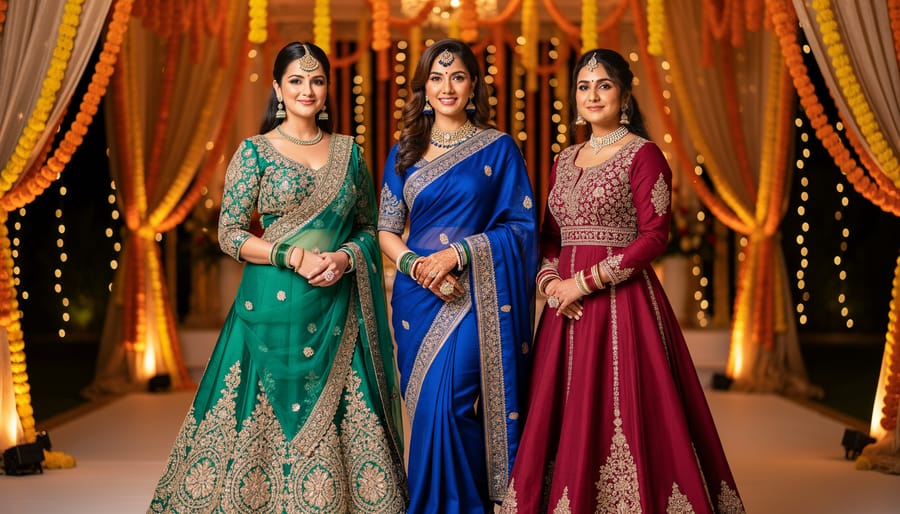
Attending an Indian wedding as a guest in Canada calls for vibrant, elegant traditional attire that honors the celebration’s cultural richness. The most appropriate choices are a lehenga choli, silk saree, or Anarkali suit in jewel tones like emerald, royal blue, or ruby, or fresh pastels for daytime events like the mehendi ceremony. These outfits respect the formality of Indian weddings, which typically span multiple events over several days, each with its own dress expectations.
Many Canadian guests, especially those unfamiliar with South Asian weddings, wonder what’s appropriate and where to find authentic pieces locally. The good news? You don’t need to travel far. Cities across Canada now offer boutiques specializing in Indian bridal wear, and online retailers ship nationwide, making it easier than ever to find stunning options that fit your style and the occasion.
Understanding what to wear goes beyond picking a pretty outfit. It’s about showing respect for traditions while celebrating alongside your hosts. Avoid common missteps like wearing white (reserved for funerals in many Indian cultures), dressing too casually with cocktail-length dresses or jeans, or choosing overly revealing styles. Instead, embrace the opportunity to wear something truly special, complete with beautiful embroidery, flowing silhouettes, and the kind of color that makes Indian weddings unforgettable.
Whether you’re attending your first sangeet or you’ve been to dozens of celebrations, finding the right ensemble means balancing cultural sensitivity with your personal comfort and the event’s specific dress code.
Understanding Indian Wedding Dress Codes
Indian weddings are joyous, multi-day celebrations that call for a significantly higher level of formality than most Western wedding events. If you’re used to cocktail dresses and semi-formal attire being appropriate guest wear, recalibrate your expectations, Indian wedding ceremonies and receptions demand elegant, traditional outfits that honor both the occasion’s cultural importance and its festive spirit.
The dress code reflects respect for the couple, their families, and centuries of tradition. Guests are expected to dress in vibrant, floor-length garments with rich colors and often intricate embellishments. This isn’t the time to avoid denim and sundresses those casual choices, along with knee-length cocktail dresses, will leave you noticeably underdressed among guests wearing ornate lehengas, flowing sarees, and embroidered Anarkali suits.
Modesty matters throughout Indian wedding celebrations. Opt for outfits with sleeves or pair sleeveless tops with a dupatta (decorative scarf) draped across your shoulders. Skirts and dresses should reach the floor, and necklines should be conservative. These aren’t restrictive rules but rather guidelines that help you blend respectfully into the celebration while still expressing your personal style through color, fabric, and embellishment choices.
Color plays a symbolic role you’ll want to understand. White is associated with mourning in some Indian communities and should be avoided. Black, while increasingly accepted at modern celebrations, can still carry somber connotations for traditional families. Instead, embrace the vibrant palette Indian weddings are known for: jewel tones like emerald, sapphire, and ruby; rich golds and coppers; or soft pastels in rose, mint, and lavender. The goal is to dress festively and joyfully, matching the celebratory energy that defines these multi-day events.
Traditional Indian Wedding Guest Outfits: Your Options
Lehenga Choli
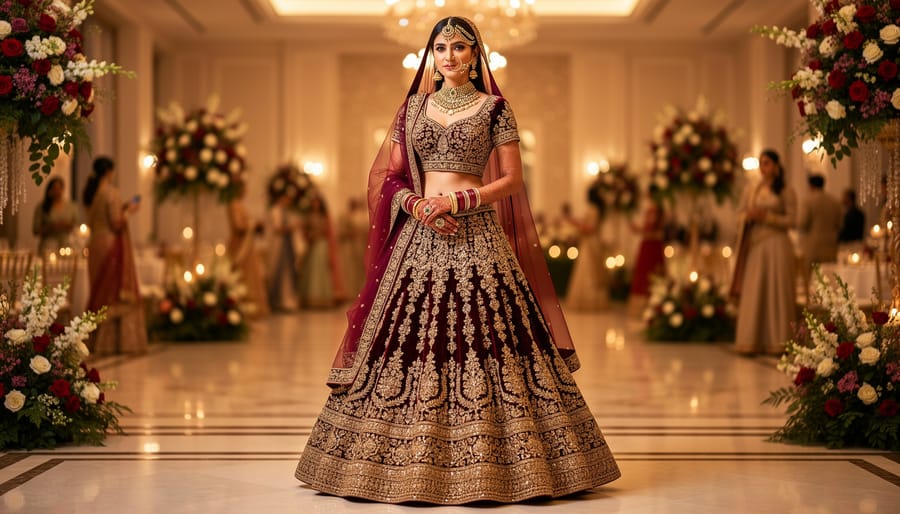
A lehenga choli is a three-piece ensemble that’s become a favourite among wedding guests for good reason. The outfit consists of a cropped blouse (choli) that typically ends just above the waist, a long flowing skirt (lehenga) that reaches the floor, and a dupatta, a long scarf draped over one shoulder or across the chest. This silhouette flatters many body types and offers remarkable versatility depending on the event.
For sangeet or reception celebrations, you’ll find heavily embellished lehengas featuring intricate embroidery, zari work, sequins, and mirror accents that catch the light beautifully as you move. These statement pieces pair well with simpler jewelry to avoid overwhelming your look. If you’re attending a mehendi ceremony, lighter lehengas in fresh vibrant tones offer a more relaxed elegance while still honouring the occasion’s festive spirit.
The beauty of a lehenga choli lies in its range. Simpler versions with minimal embroidery work well for daytime events and are easier to accessorize, while heavily embellished styles make you feel like royalty at evening celebrations. The dupatta adds an element of grace and can be styled multiple ways, giving you some creative freedom with your final look.
Silk Saree
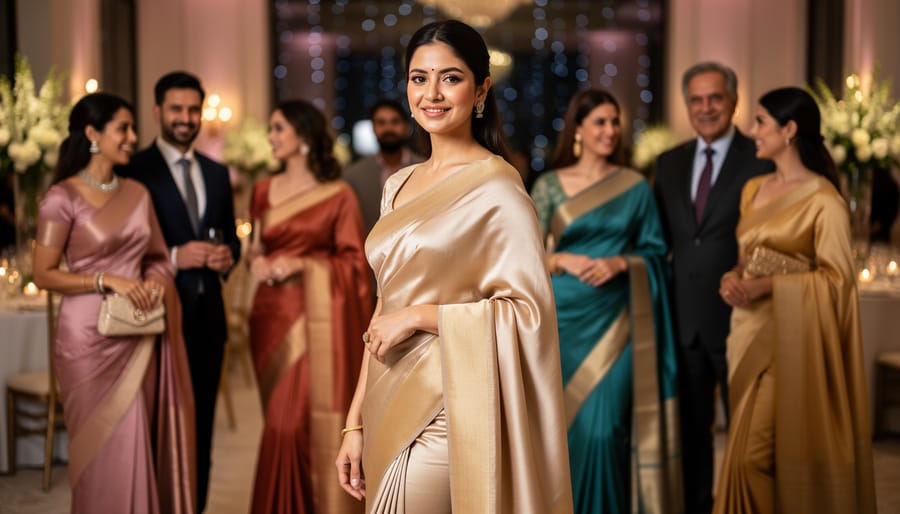
The silk saree stands as perhaps the most iconic choice for wedding guests, embodying centuries of Indian tradition in six yards of graceful fabric. This draped garment consists of an unstitched length of silk wrapped around the body over a fitted blouse and petticoat, creating an elegant silhouette that feels both regal and feminine. Rich jewel tones and pastels work beautifully, with intricate borders and embellishments adding visual interest without overwhelming the drape.
For first-time wearers, the traditional draping technique can feel daunting. The good news is that many Canadian retailers now stock pre-stitched sarees, which come with the pleats and draping already secured, allowing you to simply slip into the garment like a dress. This innovation removes the learning curve while preserving the authentic look, making sarees accessible for guests who want traditional elegance without the complexity.
When selecting a silk saree, consider the ceremony’s formality and duration. Lighter silks offer easier movement and comfort for multi-hour celebrations, while heavier Kanjivaram or Banarasi silks make stunning statements at evening receptions. Pair with statement earrings and a simple clutch to let the saree’s craftsmanship shine.
Anarkali Suit
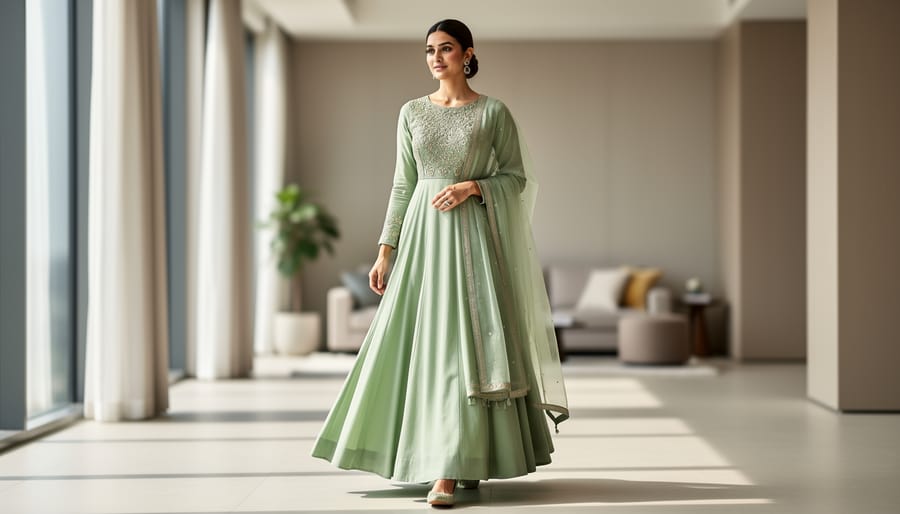
The Anarkali suit offers an ideal entry point for Canadian guests new to Indian wedding attire. This flowing ensemble features a long, floor-length kurta (tunic) that flares gracefully from the bust or waist, creating an elegant, princess-like silhouette. The kurta is paired with fitted churidar pants or comfortable leggings and a coordinating dupatta (scarf), creating a complete, cohesive look that’s both sophisticated and forgiving.
What makes the Anarkali particularly appealing for first-time wearers is its familiarity. The silhouette resembles a maxi dress, making it intuitive to wear and move in compared to draped garments like sarees. You’ll find Anarkalis in varying lengths and volumes, from subtly flared A-line styles to dramatic, heavily gathered designs with multiple layers of fabric that swirl beautifully when you move.
The versatility of Anarkali suits spans formality levels. Simpler cotton or georgette versions with minimal embroidery work well for daytime events like mehendi ceremonies, while heavily embellished silk or velvet Anarkalis adorned with zari work, sequins, or stone detailing are perfectly appropriate for evening receptions and formal ceremonies. Many Canadian boutiques stock Anarkalis specifically because they’re comfortable for extended wear during multi-hour celebrations, and the fitted pants provide ease of movement that guests appreciate when participating in dancing and festivities.
Choose rich jewel tones or pastels as recommended for Indian wedding guests, and you’ll have an outfit that honors tradition while keeping you comfortable throughout the celebration.
Choosing the Right Style for Each Wedding Event
Indian weddings are truly multi-day celebrations, and each event calls for a distinct style and formality level. Understanding what to wear when will help you look appropriate while enjoying every moment of these vibrant festivities.
The mehendi ceremony kicks off the celebrations with an intimate, artistic focus on henna application. This daytime event welcomes lighter, more relaxed attire in cheerful, nature-inspired colors. In Canada, sharara sets and light lehengas in fresh vibrant tones like mint green, coral, sunshine yellow, or sky blue work beautifully for mehendi functions. These outfits offer comfort for sitting during the henna application while keeping you stylishly dressed for the occasion. Cotton or lightweight silk fabrics breathe well and won’t show henna stains as prominently as darker colors might.
The sangeet is your chance to dress for drama and movement. This pre-wedding music and dance party calls for outfits that let you move freely while making a statement. A heavily embellished Anarkali suit or a twirling lehenga in bold jewel tones creates the perfect look. Think emerald green, ruby red, sapphire blue, or deep magenta. These events often take place in evening venues where families choose the right venue for performances and dancing, so your outfit should photograph beautifully under party lighting.
Here’s a quick reference for matching your attire to each event:
- Mehendi: Light lehenga or sharara in fresh pastels (mint, coral, yellow, sky blue) for daytime comfort
- Sangeet: Embellished Anarkali or twirling lehenga in bold jewel tones (emerald, ruby, sapphire, magenta) for dancing
- Wedding Ceremony: Silk saree or heavily embroidered lehenga in traditional rich colors (burgundy, navy, gold, deep purple)
- Reception: Your most formal outfit in luxurious fabrics with statement embellishments (sequins, zari work, mirror work)
The wedding ceremony itself demands your most respectful and traditional attire. A silk saree or a heavily embroidered lehenga choli in rich, traditional colors like burgundy, navy blue, gold, or deep purple honors the sacred nature of the event. This is not the moment for experimentation with modern fusion styles.
The reception typically serves as the grand finale, calling for your most formal, glamorous look. Think luxurious fabrics with statement embellishments such as sequins, zari work, or mirror work. Darker, richer tones photograph beautifully and convey the sophistication this evening celebration deserves.
Key Factors When Selecting Your Outfit
Selecting the perfect outfit for an Indian wedding involves balancing aesthetics with practicality. Your choices around fabric, embellishments, and fit will determine not only how stunning you look but how comfortable you feel throughout hours of celebration.
Fabric Quality and Weight
Indian wedding attire features luxurious fabrics that drape beautifully and photograph well. Silk, velvet, chiffon, georgette, and brocade are traditional choices that bring elegance to any outfit. For Canadian venues, consider the season and indoor climate. Heavy silk or velvet lehengas work wonderfully for winter weddings in climate-controlled ballrooms, while lighter georgette or chiffon fabrics suit summer celebrations. Quality fabrics hold embroidery better and maintain their shape through long events, making them worth the investment if you plan to wear the outfit again.
Embellishment Level
The amount of embroidery, beadwork, and embellishment signals formality. Heavily embellished outfits with intricate zari work, sequins, or stone detailing suit evening receptions and main ceremonies. Lighter embellishments or printed fabrics work well for daytime mehendi or sangeet events. Balance is key: if your outfit features extensive embellishment, you can tone down accessories, but simpler garments give you room to showcase statement jewelry. Many of the same bridal attire tips about coordinating embellishment apply to guest outfits as well.
Comfort and Fit
Indian weddings run for hours, with guests standing, dancing, and moving between ceremony spaces. Your outfit needs to fit well without restricting movement. Lehengas and Anarkalis should allow you to sit comfortably and walk easily. If you’re trying traditional draping like a saree for the first time, practice beforehand or opt for a pre-stitched version. Allow time for alterations, especially if ordering online, as proper fit transforms how an outfit looks and feels.
Color Selection
Rich jewel tones like emerald, sapphire, ruby red, and amethyst are classic choices that photograph beautifully. Pastels in rose, mint, peach, and lavender offer softer elegance. Avoid pure white, which is reserved for mourning in some Indian traditions, and be cautious with black unless you know it’s welcomed by the family. Vibrant colors celebrate the joyous occasion and show respect for the cultural significance of the event.
Budget Considerations
Indian wedding attire spans wide price ranges. Decide early whether you’ll purchase or rent, as both options exist through Canadian retailers. Setting a clear budget helps narrow choices and lets you stay within your budget while still finding something stunning. Factor in alteration costs and accessories when calculating total spend.
Where to Find Indian Wedding Guest Dresses in Canada
Canada’s vibrant multicultural communities offer exceptional access to authentic Indian wedding guest attire, with options ranging from brick-and-mortar boutiques to convenient online shopping and rental services.
Local Boutiques in Major Cities
Toronto, Vancouver, Calgary, and Montreal each host thriving South Asian fashion districts where you can browse stunning collections in person. Toronto’s Gerrard India Bazaar and Brampton’s boutiques offer extensive selections of lehengas, sarees, and Anarkali suits, with many stores providing alteration services on-site. Some of these specialists also carry Western bridal wear, making them valuable resources alongside Toronto bridal boutiques for guests attending fusion celebrations. Vancouver’s Punjabi Market features established retailers with pieces ranging from contemporary fusion styles to traditional silk sarees, while Calgary’s northeast neighborhoods and Montreal’s Parc-Extension area house boutiques catering to diverse regional Indian aesthetics.
Shopping in person offers the advantage of feeling fabric quality, seeing embellishments up close, and receiving expert styling advice from staff familiar with wedding dress codes.
Your Canadian Shopping Options
- Local boutiques in Toronto (Gerrard India Bazaar, Brampton), Vancouver (Punjabi Market), Calgary (northeast neighborhoods), Montreal (Parc-Extension)
- Online Canadian retailers offering domestic shipping and easy returns for convenient at-home shopping
- Custom tailoring services that create made-to-measure outfits based on your preferences and measurements
- Rental platforms specializing in Indian occasion wear, ideal for one-time event attendance
Online and Rental Alternatives
Several Canadian-based online retailers ship domestically, eliminating cross-border fees and lengthy delivery times. These platforms often feature detailed size guides and customer reviews to help you choose confidently. For guests attending a single Indian wedding, rental services provide budget-friendly access to designer pieces without the commitment of purchase. Many rental companies offer try-at-home programs and professional cleaning, returning your outfit as simple as dropping it in the mail.
Custom tailoring services, available in most major cities, let you select fabrics and embellishments while ensuring a perfect fit. This option works particularly well if you have specific color preferences or need accommodations for sizing outside standard ranges. Allow four to six weeks for custom orders to account for creation and fitting appointments.
Common Mistakes to Avoid
When attending an Indian wedding in Canada, guests sometimes make avoidable missteps that can detract from the celebration or cause unintended offense. Understanding these common errors helps you participate respectfully and comfortably.
The most frequent mistake is underdressing for the occasion. Many first-time guests assume their standard cocktail attire or sundress will suffice, but Indian weddings call for significantly more formal clothing. Jeans, casual sundresses, and cocktail-length dresses are considered too informal for most events. Instead, plan to wear a lehenga choli, silk saree, or Anarkali suit that matches the celebratory atmosphere.
Color choices deserve careful consideration. While white symbolizes purity in Western weddings, it’s traditionally associated with mourning in Indian culture, making it inappropriate for celebrations. Black, though increasingly accepted at modern Indian weddings, can also carry negative connotations. If you’re unsure, stick with rich jewel tones or pastels that celebrate the joyful occasion.
Accessorizing requires balance. Over-accessorizing with heavy jewelry, elaborate bindis, and multiple statement pieces can appear costume-like, especially if you’re unfamiliar with traditional styling. Conversely, pairing an embellished lehenga with minimal accessories leaves your look incomplete. Just as you’d carefully choose the right ring for significant life moments, select accessories that complement rather than compete with your outfit.
Comfort often gets overlooked in pursuit of style. Indian weddings span multiple hours with dancing, standing, and socializing. Choosing restrictive clothing or painful footwear will leave you miserable long before the celebration ends. Select outfits that allow movement and shoes you can actually wear for an extended period.
Styling Tips and Accessories
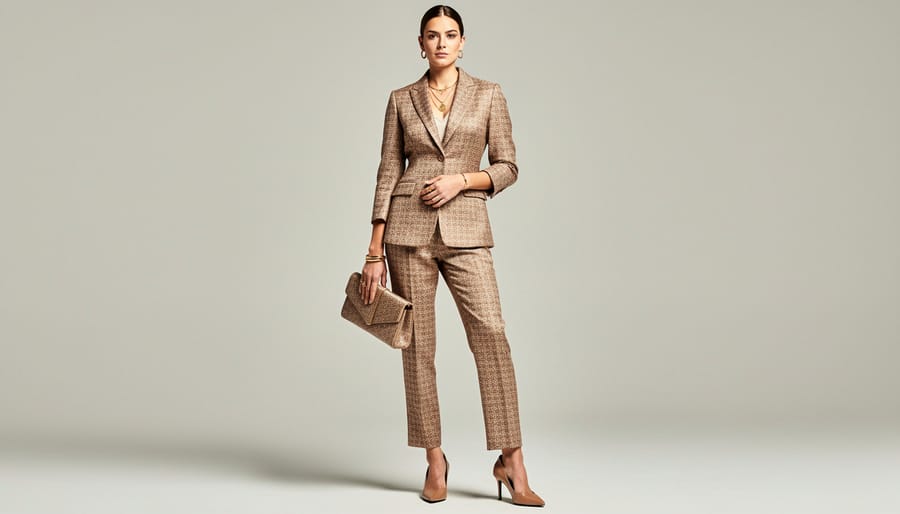
The right accessories transform your Indian wedding guest outfit from beautiful to breathtaking. Start with jewelry that complements rather than competes with your ensemble. If your lehenga or saree features heavy embellishment and embroidery, choose simpler pieces like delicate jhumka earrings and a slim bangle set. Conversely, if you’re wearing a plain silk saree in jewel tones or pastels, this is your moment for statement jewelry: consider a bold choker necklace, chandelier earrings, or stacked bangles that jingle as you move.
For footwear, opt for embellished flats or low block heels since you’ll be on your feet for hours celebrating across multiple ceremonies. Kolhapuri sandals, embroidered juttis, or beaded heels in gold or metallic tones work beautifully and keep you comfortable during the sangeet dancing and reception festivities. Carry a small clutch in a complementary color, preferably with beading or metalwork that echoes your outfit’s details.
Hair styling deserves attention too. A sleek low bun adorned with fresh flowers creates an elegant, traditional look, while loose curls pinned to one side suit Anarkali suits and sharara sets perfectly. For mehendi events featuring vibrant tones, consider a braided style woven with colorful ribbons. The goal is balance: your accessories should enhance your outfit’s beauty while allowing the rich fabrics and cultural significance of your attire to shine through.
Frequently Asked Questions
When preparing for your first Indian wedding in Canada, you likely have questions about what is acceptable, practical, and respectful. Here are answers to the most common concerns guests ask when choosing their attire.
Can I wear Western formal wear to an Indian wedding?
While a formal Western gown might seem appropriate, it’s generally not recommended for Indian wedding ceremonies. Most Western formal wear, including cocktail-length dresses and evening gowns, doesn’t match the cultural dress code expectations or the celebratory, vibrant aesthetic of Indian weddings. Traditional outfits like lehenga cholis, silk sarees, or Anarkali suits are far more appropriate and show respect for the cultural significance of the celebration.
How far in advance should I shop for an Indian wedding outfit?
Start shopping at least six to eight weeks before the wedding, especially if you’re ordering online or considering custom tailoring. Many boutiques in Toronto, Vancouver, and other Canadian cities carry ready-to-wear options, but alterations often take two to three weeks. If you’re ordering from India or having something custom-made, allow three months to account for shipping and fitting adjustments.
Can I rewear my Indian wedding outfit to other events?
Absolutely. Traditional Indian outfits are investments that can be worn to multiple celebrations, including other weddings, religious festivals like Diwali, and cultural events throughout the year. Choose versatile pieces in classic colors and moderate embellishment levels that can be styled differently with accessories for various occasions.
Is it okay to wear black to an Indian wedding?
While black was traditionally avoided at Indian weddings as it’s associated with mourning in some regions, contemporary celebrations have become more flexible. Richly embellished black outfits with gold or colorful accents are now increasingly accepted, especially for evening receptions. However, if you’re unsure about the family’s preferences, opt for jewel tones or pastels instead.
What if I’m on a budget?
Indian wedding attire doesn’t have to break the bank. Look for rental options at South Asian boutiques in major Canadian cities, which offer designer pieces at a fraction of the purchase price. Online retailers shipping within Canada often have sales sections, and simpler Anarkali suits or pre-stitched sarees can be both affordable and elegant. You can elevate a budget-friendly outfit with thoughtful accessorizing.
Remember that the wedding invitation or the couple themselves can be your best resource if you have specific questions about their celebration. Most hosts appreciate guests who take the time to understand and honor their cultural traditions, and they’re usually happy to offer guidance. The effort you put into selecting appropriate attire demonstrates respect and helps you fully participate in the joyful, colorful festivities that make Indian weddings so memorable.
Choosing the perfect outfit for an Indian wedding is more than a fashion decision, it’s an opportunity to honor beautiful traditions and participate fully in one of Canada’s most vibrant cultural celebrations. Whether you select a flowing Anarkali suit, an elegant silk saree, or a richly embellished lehenga choli, you’re showing respect for the couple and their heritage while experiencing the joy of wearing stunning, meaningful attire.
Canada’s multicultural landscape means we’re fortunate to witness and join in celebrations that weave together diverse customs and stories. Attending an Indian wedding gives you a chance to step outside everyday fashion and embrace colors, fabrics, and silhouettes that turn guests into part of the celebration itself. The effort you put into selecting appropriate attire demonstrates thoughtfulness and creates a deeper connection to the festivities.
As you prepare for the celebration, remember that your presence, dressed in culturally respectful, celebratory attire, adds to the richness of the occasion. You’ll create lasting memories not just of the ceremony and festivities, but of feeling beautiful while celebrating love that bridges cultures and communities.