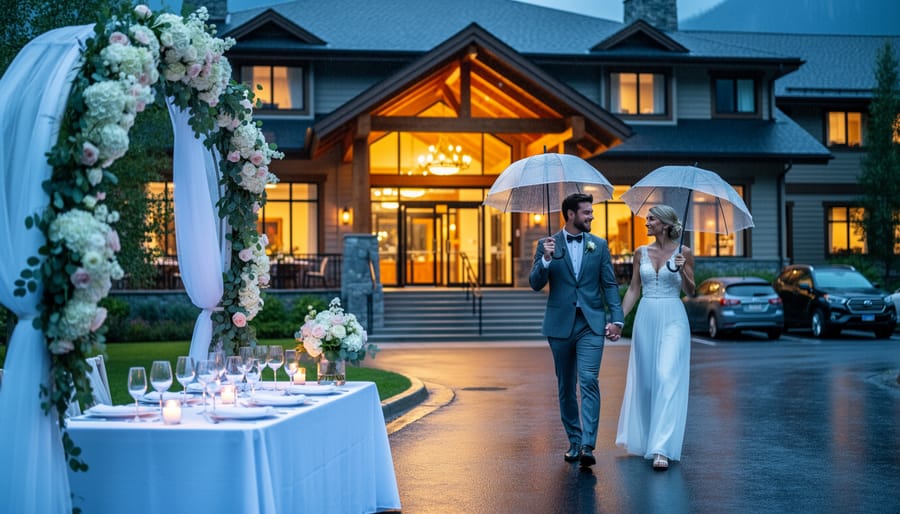
Wedding venues with accommodation let you turn your big day into a full weekend celebration while simplifying logistics for out-of-town guests. These all-in-one destinations handle ceremony, reception, and overnight stays under one roof, eliminating the shuttle-bus scramble and giving your loved ones more time to connect. Whether you’re dreaming of a lakeside resort, a historic estate, or a hotel ballroom with onsite rooms, you’ll discover options across every budget and guest count, from intimate 50-person gatherings to grand celebrations welcoming hundreds.
The beauty of these venues extends far beyond convenience. For couples celebrating multicultural traditions that span multiple days or require specific ceremony spaces, having everyone stay together becomes essential. Your Hindu wedding’s mehndi night flows into the next morning’s ceremony when guests simply take the elevator downstairs. Your Chinese tea ceremony feels relaxed when grandparents don’t face an early-morning drive across an unfamiliar city.
Canada offers remarkable variety, from the Sheraton Fallsview Hotel overlooking Niagara Falls to the Harrison Hot Springs Resort nestled in British Columbia’s mountains. Montreal’s Hôtel Bonaventure Montréal brings urban sophistication, while Vancouver’s River Rock Casino Resort combines entertainment with elegant event space. These established properties join hundreds of boutique estates, country inns, and reimagined historic buildings that welcome wedding parties for entire weekends.
The planning timeline matters too. If you need to plan in 3 months venues with built-in accommodation often streamline decisions precisely when time is tight. You’re coordinating with one venue manager instead of juggling ceremony sites, reception halls, and hotel room blocks at three different properties.
What Makes Venues With Accommodation Different
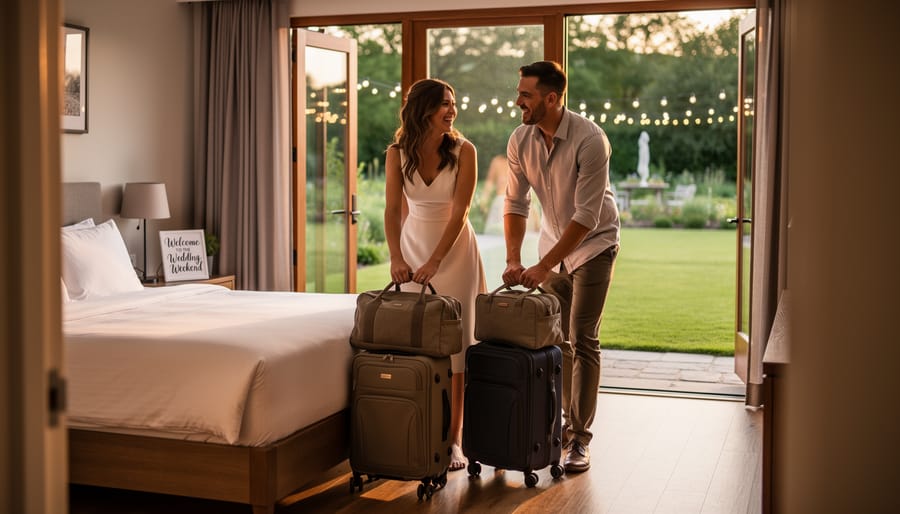
Venues with accommodation flip the traditional wedding-venue script. Instead of treating lodging as an afterthought, they make it central to the celebration, transforming a single-day event into a multi-day experience where guests arrive, settle in, and immerse themselves fully in your weekend. For couples, this shift means fewer moving parts: no coordinating shuttle schedules between hotels and ceremony sites, no worrying whether Aunt Marie will find the reception venue after dark, and no guests rushing off at midnight because they have a long drive ahead.
The real power lies in control and continuity. When everyone stays on-site, you shape the entire atmosphere, from welcome drinks Friday evening to brunch Sunday morning. Guests relax more deeply when they can walk from their room to the ceremony lawn in minutes, knowing they won’t miss cocktail hour hunting for parking. For couples, that relaxed energy becomes part of the celebration itself, fostering connection among families who might otherwise only interact during the ceremony.
This model suits Canada’s vast geography particularly well. When guests travel from Halifax to Vancouver, or drive three hours from rural Alberta into the Rockies, having accommodation waiting removes a major stressor. They arrive, unpack once, and stay put. Multi-day weddings, increasingly common for South Asian, Chinese, and other cultural celebrations that unfold across multiple ceremonies, benefit enormously from this convenience.
Venues with lodging also give couples leverage. You’re not just booking a ceremony space; you’re securing an entire guest experience, which often means more negotiating power, bundled pricing, and the freedom to extend celebrations without logistical headaches. It’s planning simplified, and memories amplified.
Key Factors to Consider When Choosing Your Venue
Guest Count and Accommodation Ratio
The most common approach is to provide on-site accommodation for 30 to 50 percent of your guest list, prioritizing those travelling the furthest or serving in your wedding party. If you’re inviting 100 guests, aim for venues offering 15 to 25 rooms, which typically handles your core group while local attendees commute home.
Calculate your needs by listing out-of-town guests first, then elderly relatives or those with mobility concerns who benefit from staying on-site. Wedding parties often book every available room for an intimate 30-guest celebration, creating a true retreat atmosphere. Larger weddings of 200 or more rarely need full accommodation, instead securing blocks covering 40 percent of attendees.
Partial accommodation works beautifully when your venue sits near additional hotels or when a significant portion of your guest list lives within an hour’s drive. Venues like those across Ontario’s GTA region often partner with nearby properties, letting you offer convenient options without requiring exclusive access to dozens of rooms. The key is communicating lodging details early so travelling guests can plan confidently.
Exclusive Access vs. Shared Venue
Exclusive access means booking an entire property for your wedding weekend, giving you complete control over the space, schedule, and guest experience. Your party has the venue to themselves, no other events, no public guests wandering through your ceremony, and total privacy. This option suits couples who want an intimate, uninterrupted celebration and don’t mind paying a premium for that exclusivity. Many farms, estates, and boutique retreats operate exclusively this way, requiring you to book all available rooms.
Shared venues host multiple events simultaneously or remain open to the public during your celebration. Large hotels like Sheraton Fallsview or Harrison Hot Springs Resort typically fall into this category, your reception happens in a dedicated ballroom while other guests use the hotel amenities. You’ll share common areas, and other weddings might occur the same day. The upside? Lower minimum spending requirements and more flexible booking terms. The trade-off is less control over atmosphere and occasional disruptions.
Consider your priorities: exclusive access creates a private retreat feel perfect for multi-day multicultural celebrations, while shared venues offer practical convenience and cost savings without sacrificing quality ballroom space or guest accommodations.
Location and Accessibility
Location shapes every aspect of your venue-with-accommodation experience. That stunning lakeside estate three hours from the nearest airport might photograph beautifully, but it creates real challenges for elderly grandparents or guests flying in for a single weekend.
Start by mapping where most guests are coming from. If 80% live within two hours of Toronto, a Muskoka retreat works well. But if you’re hosting family from Vancouver, Montreal, and Halifax, choosing a venue near Pearson Airport or downtown transit hubs reduces everyone’s travel burden considerably.
Consider the full journey, not just drive time. Guests need clear directions, reliable cell service for navigation, and winter road conditions if you’re planning an off-season celebration. Remote venues often require shuttle coordination, which adds cost and scheduling complexity.
For mobility-limited guests, confirm ground-floor accommodation availability, elevator access to ceremony and reception spaces, and parking proximity to entrances. Wheelchair-accessible washrooms and ramps matter more than scenic hilltop locations when your grandmother uses a walker.
The sweet spot? Venues within 30 minutes of major airports or cities, offering the best of both worlds, enough distance to feel like a destination, close enough that no one misses your day because travel felt impossible.
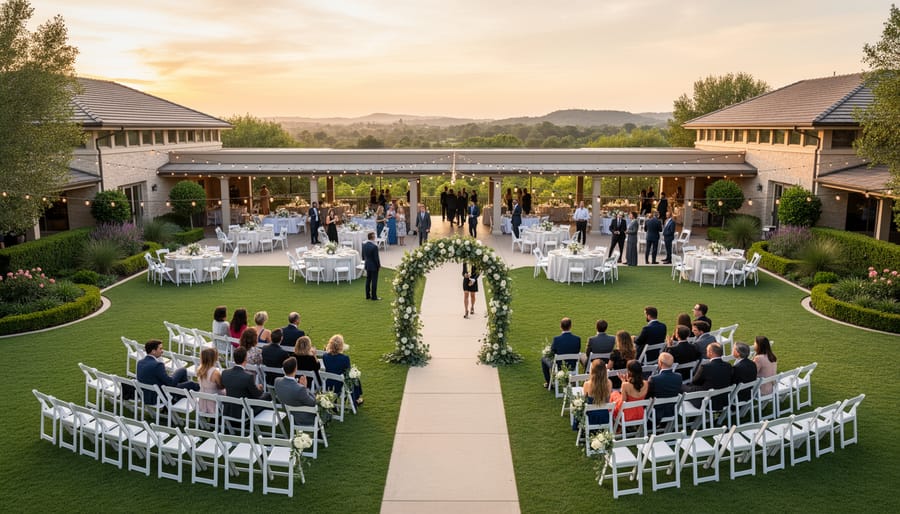
Types of Wedding Venues With Accommodation Across Canada
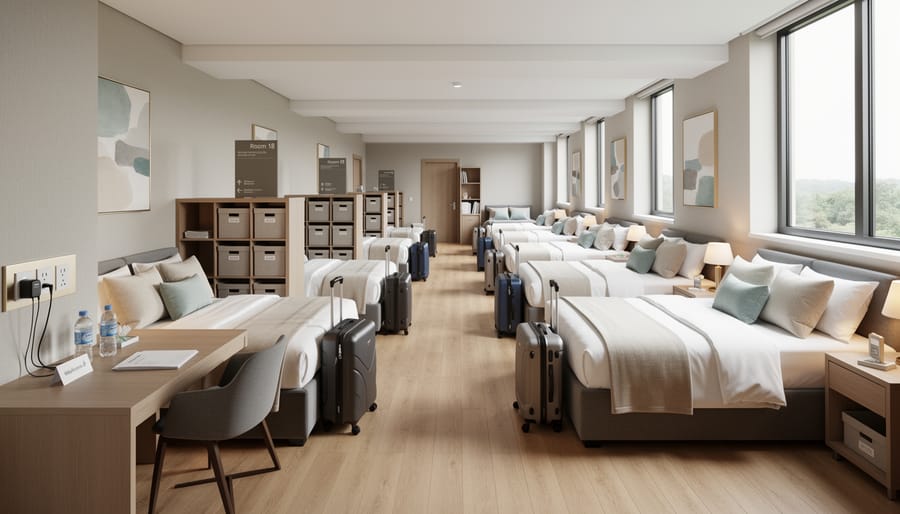
Hotels and Urban Resorts
City hotels and resort properties deliver the ultimate one-stop convenience for couples who want everything handled under a single roof. These venues combine ceremony spaces, ballrooms or banquet facilities, and guest accommodations in one location, eliminating coordination headaches and transportation logistics entirely.
Urban hotels particularly shine for couples with guests flying in from across Canada or internationally. Properties like the Sheraton Fallsview Hotel in Niagara Falls or Hôtel Bonaventure Montréal offer immediate access to airports, entertainment districts, and city amenities while providing professional wedding coordination teams experienced in managing large-scale events. River Rock Casino Resort in Richmond and Harrison Hot Springs Resort in British Columbia demonstrate how resort properties extend the hotel model with spa facilities, recreational activities, and scenic natural settings that keep guests entertained throughout the weekend.
These venues typically provide standardized packages that bundle ceremony setup, reception service, catering, and room blocks, making budgeting more predictable. The trade-off is less flexibility in vendor selection and décor choices compared to independent venues, but the convenience factor resonates strongly with busy couples who value streamlined planning and guaranteed guest comfort.
Destination Resorts and Retreats
Destination resorts and retreats transform your wedding into a multi-day retreat where guests immerse themselves in a shared experience rather than rushing between separate locations. These properties, often nestled in mountains, lakeside settings, or wine country, encourage couples to create festival-style celebrations where the ceremony becomes just one highlight of an entire weekend together.
Remote resorts like Harrison Hot Springs Resort offer natural beauty that requires minimal decoration while keeping everyone on-site from welcome drinks through farewell brunch. Guests wake up together, explore the property between events, and gather spontaneously rather than dispersing after the reception. This format particularly suits couples who value quality time with loved ones over traditional formality, and it works beautifully when most guests are traveling anyway.
The trade-off is accessibility. These venues require more planning around transportation, especially for elderly guests or those without vehicles. You’ll also typically need minimum room commitments, sometimes the entire property, which works best when your guest list fills the available accommodation. The payoff is privacy, atmosphere, and a wedding that feels like a destination celebration without leaving Canada.
Farms, Estates, and Historic Properties
Farms, estates, and historic properties bring unmistakable character to Canadian weddings, offering exposed beams, stone fireplaces, sprawling gardens, and that lived-in charm modern venues can’t replicate. These properties often provide cottages, guest suites, or converted outbuildings where your closest family and wedding party can stay right on the grounds, making morning preparations and late-night celebrations feel seamless and intimate.
Rustic barn venues in Ontario’s countryside, heritage manor houses in Quebec, and vineyard estates in BC’s Okanagan create immersive weekend experiences that urban hotels simply can’t match. You’re not just renting a room, you’re securing a private backdrop where ceremony, reception, and lodging exist in one cohesive setting, eliminating shuttles and scattered timelines.
These venues shine for couples wanting a relaxed, festival-style vibe and for those planning multi-day celebrations that demand flexibility. If you’re hosting multicultural weddings requiring extended ceremony times, multiple ritual spaces, or specialized catering setups, estates with exclusive access give you control over timing and vendor choices that hotel ballrooms often restrict. They’re equally valuable for cultural guest planning where out-of-town family members travelling significant distances appreciate staying in cozy, communal spaces rather than anonymous hotel corridors.
Banquet Halls With Hotel Partnerships
Banquet halls with hotel partnerships offer a practical middle ground for couples who want dedicated celebration spaces alongside convenient accommodation. This model thrives in Ontario’s Greater Toronto Area, where established banquet facilities coordinate room blocks at nearby hotels rather than providing on-site lodging. It’s particularly popular for multicultural weddings that need specialized ceremony and reception spaces but still want guest convenience.
Crystal Grand Banquet Hall in Mississauga exemplifies this approach, accommodating 35 to 300 guests in dedicated event spaces while partnering with surrounding hotels for overnight stays. Claireport Place Banquet & Convention Centre in Toronto takes this further, handling celebrations from 50 to 1000 guests with coordinated lodging nearby. The Eglinton Grand offers another variation, with capacity for 10 to 420 guests in a historic Toronto venue that connects guests to area hotels.
This hybrid model works well when you need culturally-specific amenities, halal or kosher catering, prayer spaces, traditional décor, that boutique properties may not accommodate. The tradeoff is logistical: you manage two contracts instead of one, and guests shuttle between locations. Ask venues which hotels they work with regularly, whether they negotiate group rates, and how far guests will travel between ceremony, reception, and beds.
Our Recommendations by Wedding Style and Region
For Intimate Gatherings (Under 50 Guests)
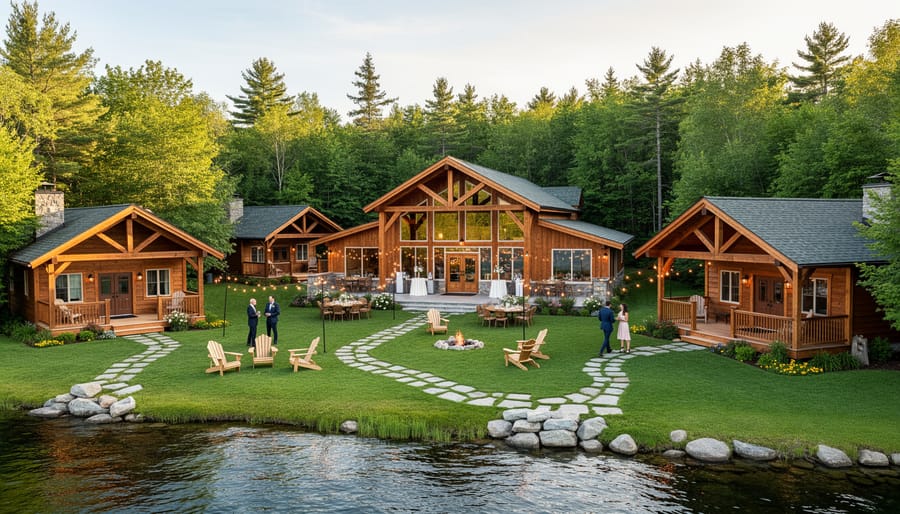
Boutique estates and countryside retreats shine for intimate gatherings, where personalized service and cozy spaces create warmth that larger properties can’t match. Look for small wedding venues offering 10 to 15 guest rooms, enough to house your closest circle without overwhelming staff capacity or feeling empty. Properties with single dining rooms, wraparound porches, and communal gathering spaces foster the relaxed, festival atmosphere that makes weekend venue ideas so appealing for smaller celebrations. Farms with heritage cottages, lakeside lodges, and restored heritage homes typically accommodate 30 to 50 guests comfortably, letting you secure exclusive access without the premium pricing larger estates command. Prioritize venues where your group fills most rooms, you’ll receive attentive service, flexible scheduling for cultural ceremonies, and the freedom to shape your celebration around meaningful moments rather than rigid timelines.
For Large Celebrations (200+ Guests)
Large celebrations demand venues with substantial ballroom capacity and enough on-site rooms to accommodate a significant portion of your guest list. In Ontario’s Greater Toronto Area, properties like Claireport Place Banquet & Convention Centre can host up to 1,000 guests with nearby hotel partnerships for room blocks, while The Guild Inn Estate offers similar scale with heritage charm. Old Mill Toronto handles up to 500 guests and provides on-site accommodation in a romantic riverside setting.
Hotels and resorts excel for these celebrations because they already have lodging infrastructure in place. River Rock Casino Resort in Richmond and Harrison Hot Springs Resort in British Columbia combine large event spaces with hundreds of guest rooms under one roof. For urban celebrations, Hôtel Bonaventure Montréal and Sheraton Fallsview Hotel offer downtown convenience with all-inclusive packages that streamline coordination for couples managing extensive guest lists across multiple provinces.
For Multicultural and Multi-Day Weddings
Multicultural weddings demand venues that understand extended timelines and cultural nuance. South Asian celebrations often require multiple ballrooms for separate Mehndi, Sangeet, and ceremony events, plus kitchens that accommodate halal or vegetarian requirements without cross-contamination concerns. Chinese banquets need proper round-table configurations and timing flexibility for traditional tea ceremonies, while Filipino weddings benefit from venues comfortable with lively multi-generational gatherings and late-night celebrations.
The Greater Toronto Area’s large banquet venues excel here. Claireport Place accommodates up to 1,000 guests with multiple event spaces, letting families host concurrent ceremonies or stage sequential events across a weekend. Crystal Grand and similar Mississauga venues understand the flow of South Asian weddings and work with specialized caterers. Look for properties where staff demonstrate familiarity with your traditions rather than treating cultural requests as obstacles. Weekend exclusive access prevents conflicts with other events and gives families the breathing room multi-day celebrations require.
Regional Highlights Across Canada
Ontario remains Canada’s most concentrated market for venues with accommodation, particularly across the Golden Horseshoe region where properties like Old Mill Toronto and The Guild Inn Estate combine heritage charm with substantial guest capacity. British Columbia attracts couples seeking mountain or coastal backdrops, with Harrison Hot Springs Resort offering natural hot springs alongside wedding facilities and River Rock Casino Resort providing full-service urban convenience near Vancouver. Quebec’s distinct cultural character and bilingual service make it ideal for couples wanting European elegance without leaving Canada, our Quebec venue guide explores Montreal and regional options in depth. The Atlantic provinces showcase intimate coastal estates perfect for smaller gatherings, while Alberta’s Rocky Mountain lodges create dramatic settings for adventure-minded couples willing to embrace remote celebration logistics.
Common Mistakes to Avoid
Booking too quickly after falling in love with a venue’s ceremony space can lead to costly surprises. Many couples realize too late that on-site accommodation doesn’t automatically mean all their guests can stay there, or that room rates exceed what their guests can afford. Before signing a contract, confirm exactly how many rooms are available on your wedding date and get a clear breakdown of nightly rates across different room types, what seems like an all-inclusive solution can quickly become a logistical nightmare if your 150-guest wedding only has access to 25 rooms.
Another common pitfall is missing hidden accommodation costs buried in contracts. Some venues require minimum room-night commitments where you’re financially responsible if guests don’t book enough rooms. Others charge facility fees, resort fees, or coordination charges that aren’t obvious in initial quotes. Always ask for a complete cost breakdown that includes these potential charges, and clarify whether you’re liable for unsold rooms in a guaranteed block.
Cultural and dietary planning frequently gets shortlisted when couples focus exclusively on the venue’s visual appeal. If you’re planning a South Asian, Chinese, Filipino, or other multicultural celebration, confirm the venue can accommodate your specific needs before falling in love with the property. Can they handle multi-day events with different setup requirements each day? Do they allow outside caterers for specialized cuisine, or can their kitchen prepare authentic dishes? Will they provide space for cultural ceremonies like a Baraat entrance or tea ceremony? These questions matter especially for venues in regions with less multicultural wedding experience.
Finally, many couples overlook exclusive-use details in their excitement. A venue might offer accommodation but continue hosting other events or remain open to public guests during your wedding weekend. If privacy and full control matter to you, explicitly confirm whether you’re booking exclusive access to ceremony spaces, reception areas, and shared amenities like pools or restaurants, and get that exclusivity in writing.
Questions to Ask During Venue Tours
Walking into a venue tour without a prepared list of questions often leads to overlooked details and surprise costs later. The right questions help you assess not just the beautiful spaces but the practical logistics that make or break a wedding weekend. Here’s what to ask at every site visit.
Start with accommodation logistics. How many guest rooms are available on your wedding date, and what room types does the venue offer? Ask whether booking the venue guarantees a room block and if there’s a minimum number of rooms you must fill. Some properties require couples to book 80% of available rooms for exclusive access, while others offer flexible blocks that only commit guests who actually reserve. Clarify the booking deadline and cancellation policy for rooms, as these vary widely.
Pricing transparency is essential to keep your budget in check. Request an itemized breakdown showing what’s included in the rental fee versus what costs extra. Ask about service charges, gratuities, bar minimums, and setup fees. Don’t assume anything is complimentary, venues often charge separately for linens, cake cutting, and even parking.
For exclusive access, ask whether you’re renting the entire property or sharing spaces with other events or public guests. If it’s shared, what areas remain private for your group, and what time restrictions apply? Confirm load-in and load-out times, especially if you’re bringing décor or cultural elements.
Cultural flexibility matters for multicultural celebrations. Can the venue accommodate extended ceremony times, multiple events across the weekend, and specific dietary requirements? Ask whether they’ve hosted weddings from your cultural background and if they work with outside vendors who specialize in your traditions.
How many rooms must we guarantee?
Most venues require a guaranteed minimum ranging from 10 to 50 rooms depending on property size, though some offer flexible blocks where you’re only responsible for rooms guests actually book.
Can we bring our own caterer?
Many venues with accommodation require you to use their in-house catering, though some allow outside caterers for cultural dishes with an additional fee. Always ask about vendor restrictions before booking.
What’s included in the rental fee?
Inclusions vary dramatically, some cover tables, chairs, linens, setup, and basic audio-visual equipment, while others charge separately for nearly everything. Request an itemized list to avoid surprises.
Is there a room block minimum?
Room block minimums typically range from zero (pay-as-you-go blocks) to 80% of total inventory for exclusive-use properties. Clarify whether unbooked rooms in your block become your financial responsibility.
Finally, ask about vendor restrictions and preferred supplier lists. Some venues require you to choose from their approved list, while others allow any licensed vendor. Understanding these limitations upfront prevents conflicts and ensures your vision aligns with what the venue permits.
What to Look For
When evaluating venues with accommodation, prioritize these decision factors to find the right fit for your celebration.
Accommodation capacity versus guest count matters most. Calculate how many guests genuinely need lodging, typically out-of-town attendees and wedding party members. Some couples aim for 60-80% on-site capacity, while others book just enough rooms for essential guests and direct locals to nearby hotels. Ask venues about their total room inventory and whether you must guarantee minimum occupancy.
Exclusive access terms dramatically affect your experience and budget. Properties offering full buyouts let you control timing, décor, noise levels, and common areas, creating an intimate weekend retreat. Shared venues cost less but mean coordinating around other events and public guests. Clarify exactly which spaces you control and when.
Cultural and dietary flexibility proves essential for multicultural celebrations. Verify the venue accommodates extended ceremonies, multiple events across days, diverse catering needs, and décor requirements specific to South Asian, Chinese, Filipino, or other traditions. Ask whether you can bring specialized caterers or must use in-house services.
All-inclusive transparency protects your budget. Request itemized pricing that separates accommodation costs from event fees, covers service charges and gratuities, and specifies what “packages” actually include. Hidden costs erode the convenience these venues promise.
Main Options Compared
Canadian couples choosing venues with accommodation face three primary pathways, each balancing convenience, capacity, and character differently.
Full-service hotels and resorts deliver turnkey simplicity, ceremony spaces, reception rooms, and guest lodging all managed by one team. Properties like Sheraton Fallsview Hotel or River Rock Casino Resort handle catering, coordination, and overnight stays seamlessly, making them ideal for couples wanting minimal vendor juggling. They excel with large guest counts and varied travel schedules, though the ballroom aesthetic may feel less personalized.
Estate venues and destination retreats offer exclusive-use experiences where your wedding becomes the only event on the property. Farms, historic estates, and remote retreats create intimate, immersive weekends with character spaces and on-site cottages or suites. You gain creative freedom and privacy, but you’ll coordinate more vendors independently and typically need smaller guest lists.
Banquet halls with hotel partnerships split the difference, celebrate in a dedicated event space like Crystal Grand or Claireport Place, then arrange room blocks at nearby hotels. This hybrid approach suits couples who want specialized reception venues without sacrificing guest convenience, especially in urban areas where hotel partnerships are well-established.
The right choice depends on whether you prioritize operational ease, aesthetic control, or cultural flexibility.
Choosing a wedding venue with accommodation puts you in the driver’s seat. When you understand what matters most, whether that’s exclusive access for your extended family celebration, proximity to Toronto Pearson for out-of-province guests, or space for multiple ceremony traditions, you can find exactly what you need without overpaying for features that don’t serve your vision.
Venues with on-site lodging transform your wedding from a single-day event into a relaxed, memorable experience where guests actually connect instead of rushing between locations. You’ll spend less time coordinating shuttles and more time celebrating.
Canada offers extraordinary diversity in these venues, from Vancouver Island retreats to Niagara Falls resort hotels to Quebec heritage estates. This geography means you have options that honour your cultural traditions, accommodate your guest count, and reflect the landscape you call home. Start your search by visiting local vendors who understand Canadian logistics, and don’t hesitate to ask the tough questions about capacity, costs, and flexibility. Your perfect venue is out there, waiting to become part of your story.