Your wedding vows can be structured as a set of promises (like “I vow to always laugh at your jokes, even the bad ones”), written as a letter read aloud during the ceremony, or even presented as a shared story you tell together by alternating lines. The most memorable vows blend personal specificity with emotional honesty, whether that means incorporating a meaningful poem, pledging support in your partner’s mother tongue, or naming the exact qualities you admire in one another.
Canadian couples are moving away from one-size-fits-all recitations and embracing vows that reflect their unique stories. From Vancouver island elopements to multicultural celebrations in Toronto bringing together families from around the world, brides and grooms want words that sound like themselves, not a script borrowed from someone else’s love story.
The key is choosing a framework that feels natural to you. Some couples thrive with structured prompts, while others prefer freeform expression. You might draw inspiration from your shared hobbies (promising to always be your partner’s climbing belay or sous chef), honour your heritage by weaving in phrases from Punjabi, Mandarin, or French, or build your vows around a metaphor that captures your relationship.
This guide offers fifteen distinct approaches, each with concrete examples you can adapt to your own ceremony. You’ll find options for the poetic and the practical, the humorous and the deeply sentimental, all designed to help you craft vows that feel authentically yours.
How We Chose These Wedding Vow Ideas
We evaluated hundreds of vow styles through conversations with officiants across Toronto, Vancouver, Calgary, and Montreal, plus interviews with recently married couples who wanted something beyond standard templates. Our selection prioritizes four key factors: cultural inclusivity that honours Canada’s diverse communities, adaptability to different ceremony sizes and formality levels, practical delivery that won’t leave you tongue-tied at the altar, and genuine emotional resonance that reflects how real couples actually speak to each other.
Every option you’ll find here works whether you’re planning an intimate 20-person elopement in the Rockies or a 300-guest celebration downtown. We deliberately chose ideas that span the spectrum from playful to profound, from minimalist to elaborate, because your vows should match your personalities, not fit someone else’s vision of what a wedding “should” sound like. These aren’t one-size-fits-all scripts, they’re frameworks you’ll customize with your own stories, inside jokes, and promises that matter specifically to you and your partner.
1. Circular Vow Exchange (Building on Each Other’s Promises)
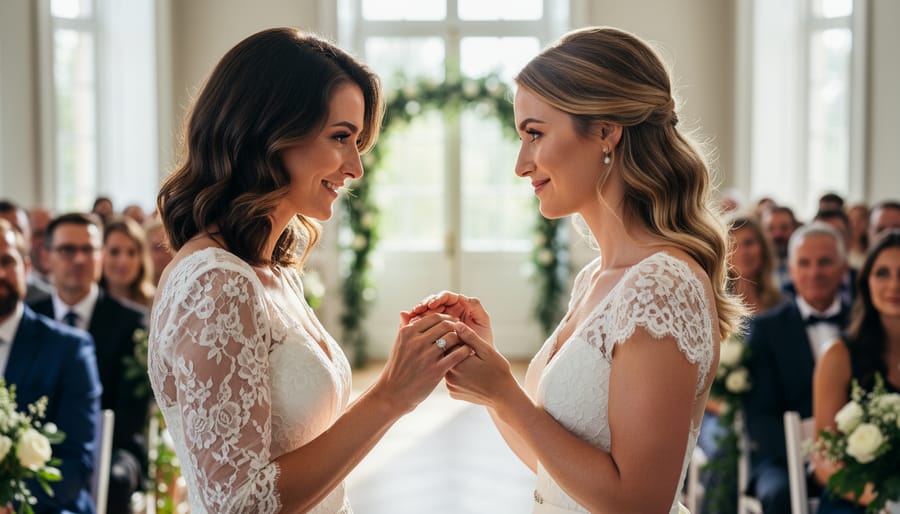
In a circular vow exchange, you and your partner speak alternating lines that respond to and build upon each other’s words, creating a single interwoven promise. Instead of two separate speeches, your vows become a genuine conversation. You might start with “I promise to be your steady ground,” and your partner responds, “And I promise to lift you when that ground feels shaky.” Then you continue, “I’ll hold space for your dreams,” followed by their “And I’ll celebrate every step you take toward them.”
This format creates profound intimacy because you’re actively listening and responding in the moment, not just waiting for your turn to speak. The back-and-forth rhythm draws guests into your connection, making them feel they’re witnessing authentic dialogue rather than prepared statements.
Canadian officiants report that circular vows have become particularly popular in interfaith ceremonies, where couples blend traditions by weaving elements from each faith into the alternating structure. The format naturally accommodates cultural融合 without privileging one tradition over another. You’ll need to write and practice together beforehand, but the delivery feels spontaneous and deeply personal.
2. Vows in Your Heritage Language (Honouring Your Roots)
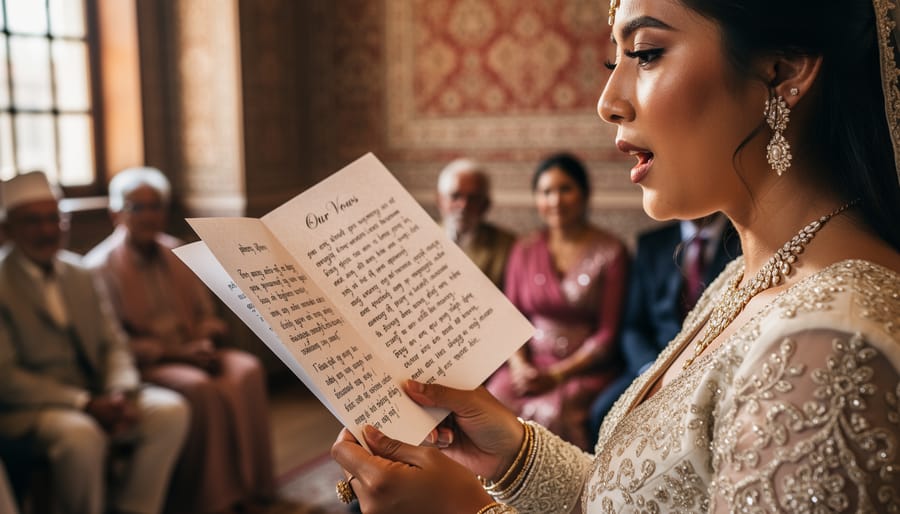
Speaking your vows in a language that connects you to your heritage transforms a wedding ceremony into a bridge between generations. Whether you choose French, Punjabi, Mandarin, Tagalog, Cantonese, Italian, or any language that holds meaning for your family, incorporating your mother tongue, or your partner’s, honours the people who shaped you while celebrating the cultural richness that defines Canadian weddings.
You don’t need to deliver your entire vow in another language. Many couples speak a meaningful opening or closing phrase in their heritage language, then continue in English so all guests understand. Others alternate languages line by line, creating a beautiful rhythm that feels both intimate and inclusive. Providing printed translations in your ceremony program ensures everyone follows along and prevents family members from feeling excluded.
Working with a professional translator matters more than you might expect. Direct translations often miss emotional nuance, so seek translators who understand wedding ceremonies and can capture both meaning and feeling. Family members can help, but professional review ensures accuracy and appropriate formality. Practice pronunciation thoroughly, stumbling over words reduces the emotional impact you’re creating.
Consider having your officiant introduce this element beforehand, explaining its significance. This context helps guests appreciate the cultural honour you’re extending to your families while making the moment feel intentional rather than confusing.
3. The Time Capsule Vow (Promises for Future Milestones)
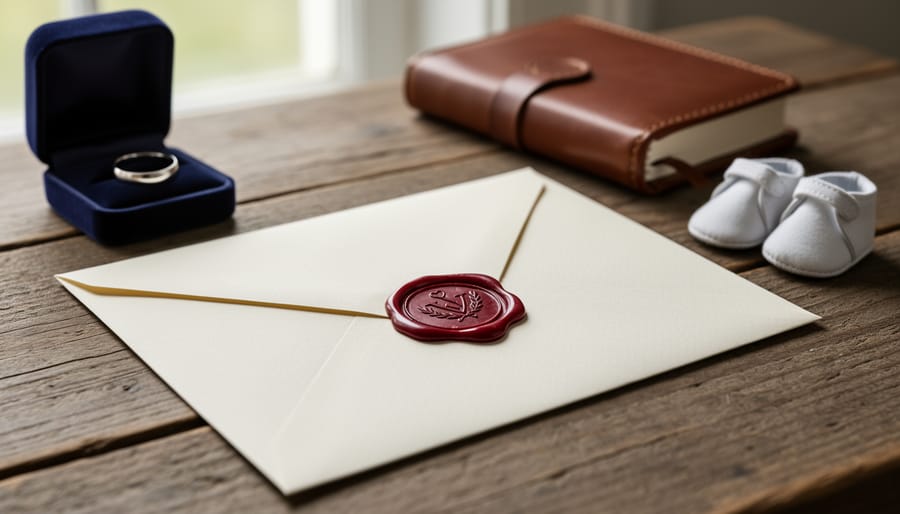
Time capsule vows let you make promises that unfold across your marriage instead of all at once. You’ll write multiple sets of vows during your engagement, one to read on your wedding day, then sealed letters for specific anniversaries like your first, fifth, and tenth years together. Each set addresses who you hope to become at that milestone: what you’ll need as new parents, how you’ll navigate career changes, the adventures you’ll take, or simply how you’ll keep choosing each other when life gets complicated.
The preparation takes some imagination. Sit down three to six months before your wedding and visualize your future selves. Your one-year vows might focus on building daily rhythms together. Five-year promises could acknowledge challenges you’ll face or dreams you’re pursuing. Ten-year vows often get deeper, reflecting on the people you’ve become through a decade of partnership.
During your ceremony, explain this tradition to guests, read your day-one vows, then seal the future ones in dated envelopes. Many Canadian couples use a decorative box they display at home, turning anniversary mornings into ceremonies of their own. It transforms your wedding vows from a single moment into a living practice that grows with your marriage.
4. Nature-Inspired Vows (Perfect for Outdoor Canadian Weddings)
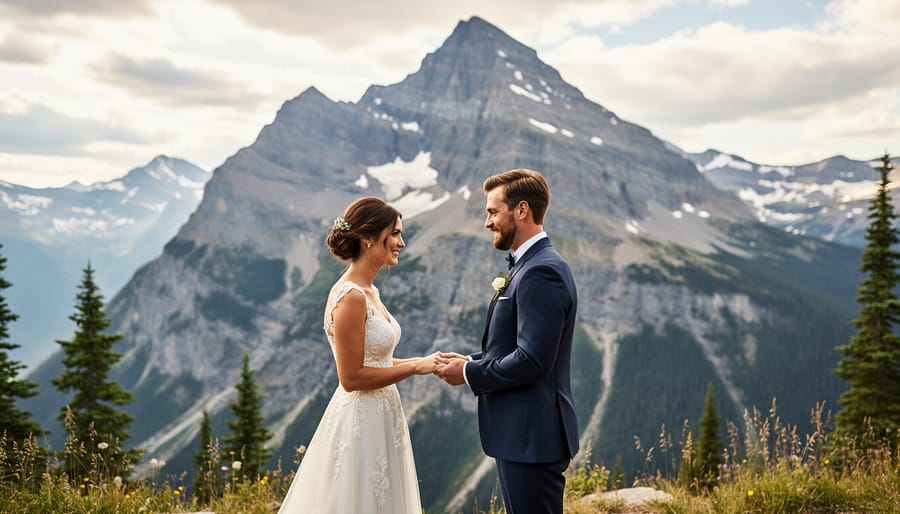
Canada’s breathtaking landscapes offer rich metaphorical ground for couples crafting personal vows. When you’re exchanging promises against the Rockies, beside the Atlantic, or under prairie skies, weaving your surroundings into your words creates an immediate, visceral connection.
Mountain vows work beautifully in Alberta and British Columbia settings. Promise to be “as steady as these peaks,” to “weather storms together like ancient stone,” or to “climb life’s challenges side by side, roped together in trust.” One Banff couple vowed to “stand tall together, roots deep like alpine fir, reaching toward shared summits.”
Coastal ceremonies in Nova Scotia or Vancouver Island inspire ocean metaphors: “I promise to be your constant tide, returning to you always,” or “to navigate life’s depths with you, trusting the current of our love.”
Prairie weddings in Saskatchewan or Manitoba lend themselves to horizon imagery: “Our love stretches endless as this land, with room to grow in every direction.” Forest settings in Ontario or Quebec invite vows about growth, shelter, and interconnected roots.
The key is specificity. Reference the actual trees, rocks, or waters surrounding your ceremony site rather than generic nature language.
5. The ‘I Promise Not To’ Vow (Honest and Humorous)
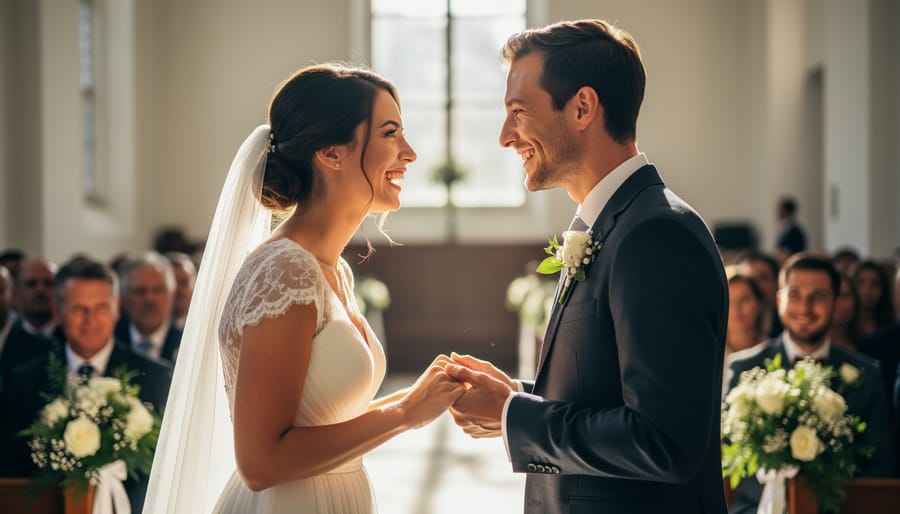
This vow style flips the traditional format by acknowledging the little things that could drive a marriage sideways, with affection and a smile. You make genuine promises about what you won’t do: “I promise not to finish the Netflix series without you,” “I promise not to let my hockey obsession consume every weekend,” or “I promise not to judge your questionable karaoke song choices.”
The magic happens when you balance these lighthearted admissions with sincere commitments. Follow three playful promises with a heartfelt one: “I promise not to let a day pass without reminding you why I chose you.” This combination shows self-awareness, you know your flaws and you’re committed to working on them.
The tone matters enormously. Aim for gentle teasing between partners who know each other deeply, not roasting or airing genuinely painful issues. Run your draft past someone who knows you both to gauge whether a particular promise lands as funny or uncomfortable. When done right, these vows get knowing laughter from guests while revealing how well you actually understand each other.
6. Seasonal Promise Vows (One for Each Season You’ll Share)

Seasonal promise vows divide your commitment into four mini-vows, each corresponding to a season and what you’ll offer your partner during that time. This approach works beautifully in Canada, where distinct seasons shape daily life and carry rich metaphorical meaning.
Structure each seasonal promise around both literal realities and deeper symbolism. Your spring vow might promise renewal after difficult times, while acknowledging the joy of watching gardens bloom together. Summer becomes about warmth, adventure, and long days spent creating memories. Fall addresses harvest, gratitude, and preparing for challenges together. Winter promises comfort, resilience, and the quiet intimacy of weathering storms side by side.
Canadian couples often tie these vows to specific regional experiences. Prairie couples reference canola fields and northern lights. Coastal pairs draw on tide patterns and storm seasons. Mountain dwellers speak to elevation changes and snowpack.
The format creates natural rhythm and balance, ensuring your vows cover the full spectrum of marriage. It acknowledges that relationships shift and require different strengths throughout the year, just as seasons demand different responses from us.
7. Song Lyric Vows (Music That Tells Your Story)
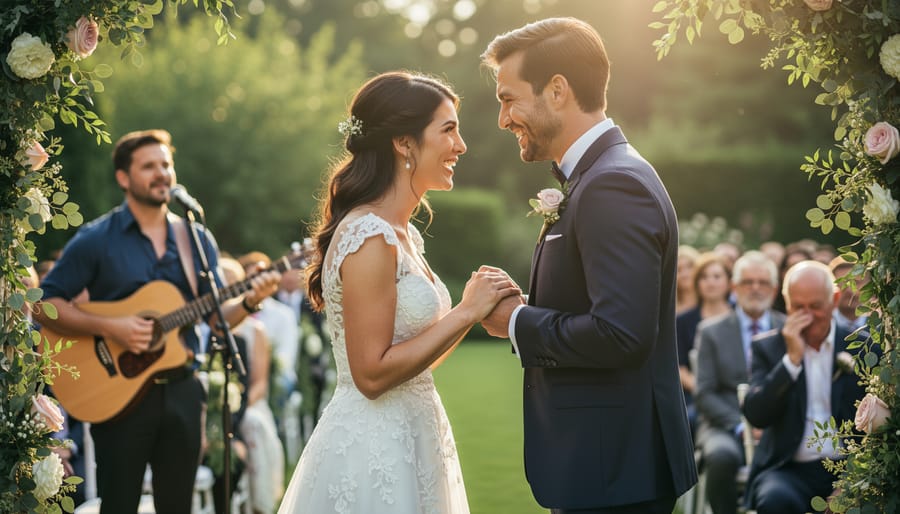
Music has soundtracked your relationship from first dance to road trips, so why not let it shape your vows? Weaving song lyrics into your promises creates instant emotional connection, guests recognize the melody, and suddenly they’re inside your love story.
The approach matters more than the song choice. Instead of reciting full verses, pull single lines that capture specific promises. “I’ll be your shelter in the storm” becomes more powerful than rattling off an entire chorus. Frame each lyric with your own words: “Like the song says, ‘I will follow you into the dark,’ and I mean it, through career changes, through loss, through every unknown turn.”
Canadian artists offer rich material. Lyrics from Joni Mitchell, Leonard Cohen, or Arcade Fire carry literary weight without feeling overdone. Indigenous artists like Buffy Sainte-Marie or contemporary voices like Jessie Reyez speak to diverse experiences across the country.
Copyright rarely matters for ceremony use, you’re not recording or publishing commercially. If a live musician performs during your vows, they handle licensing.
Skip the obvious wedding standards everyone’s heard. Your “our song” moment beats generic romance every time.
8. The Question-and-Answer Vow Format
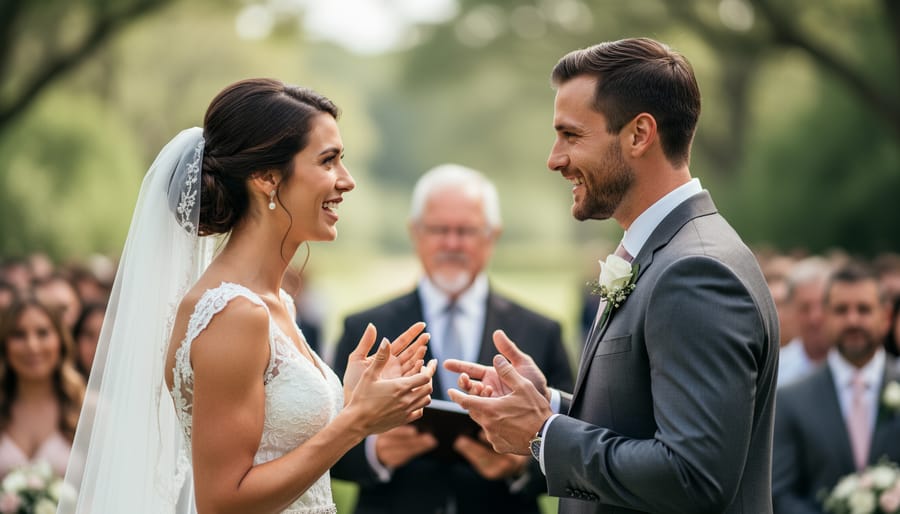
The question-and-answer format transforms vows from a monologue into a genuine conversation, creating natural rhythm and emotional peaks throughout your ceremony. Instead of declaring promises, you pose questions to your partner: “Will you stand beside me when life feels uncertain?” “Will you laugh with me even when things get hard?” Your partner responds with “I will” or personalized answers that build anticipation with each exchange.
This format naturally involves your officiant, who can introduce each question or reflect on the answers, making them feel less like a passive observer and more like a guide through your commitment. Some Canadian couples invite their community to respond after certain questions, when you ask “Will you help us keep these promises?” guests collectively answer “We will,” creating powerful shared accountability.
The structure also helps nervous speakers, since shorter exchanges feel less overwhelming than delivering a full vow uninterrupted. You maintain eye contact throughout, and your partner’s voice becomes part of your vow experience rather than waiting for their separate turn.
9. Ingredient-Style Vows (The Recipe for Our Marriage)
For couples who bond over shared meals and kitchen experiments, ingredient-style vows transform your promises into a recipe for lasting partnership. This format lists the essential “ingredients” you’ll bring to your marriage, qualities like patience, spontaneity, compromise, and humor, followed by “instructions” for blending them into a life together.
The structure naturally creates rhythm and anticipation. You might list ingredients first: “Two adventurous spirits, three cups of laughter, a generous helping of patience, and a pinch of stubbornness to keep things interesting.” Then outline your method: “Combine daily with honest communication. Stir gently during disagreements. Let simmer over a lifetime, adding new experiences as needed.”
This approach works beautifully for foodie couples planning farm-to-table receptions at Ontario vineyards or west coast celebrations featuring local seafood. The metaphor resonates because everyone understands how careful attention and the right balance create something nourishing.
Keep your recipe specific to your relationship rather than generic. If hiking fuels your connection, include “fresh mountain air.” If you’re both night owls, reference “late-night conversations as the base.” The details make it unmistakably yours while maintaining the playful warmth that makes guests smile and tear up simultaneously.
10. The Letter Vow Exchange (Read Now, Keep Forever)
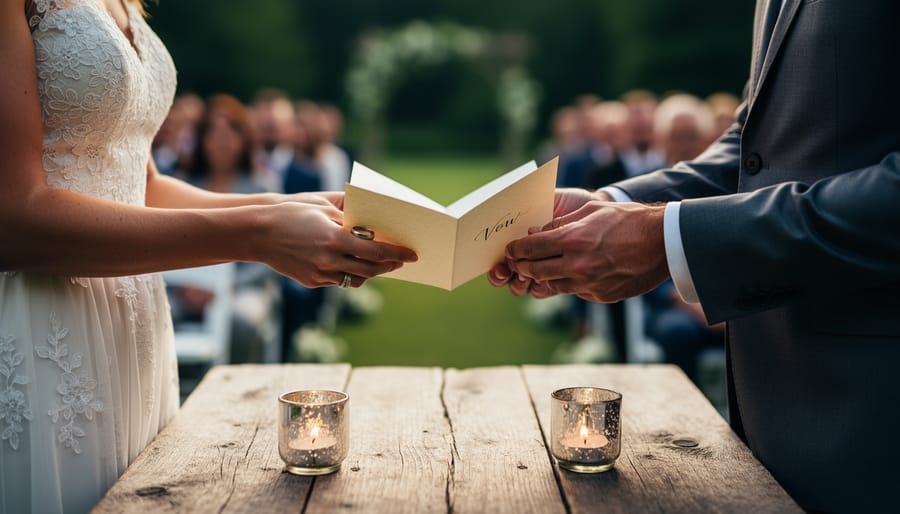
Letter-format vows offer something rare: a moment you can hold in your hands forever. You write your promises as a personal letter to your partner, read it aloud during the ceremony, then exchange the physical letters as keepsakes that travel with you through marriage.
This format gives you flexibility that traditional vows don’t. You can include deeply private sentiments meant only for your partner while reading selected portions aloud, creating intimacy within the public ceremony. Some couples read the entire letter, while others share highlights and save the rest for a private first look or wedding night reading.
Canadian couples frequently elevate this tradition by using meaningful materials. Family heirloom stationery, handmade paper from local artisans in places like Vancouver’s Granville Island, or calligraphy by regional artists transform these letters into framed keepsakes. Consider wax seals, pressed flowers from your venue’s gardens, or paper embedded with wildflower seeds you can plant together.
The letters become anniversary traditions. Couples reread them on milestone years, sometimes adding new letters to the collection as their marriage evolves.
11. Cultural Fusion Vows (Blending Two Traditions)
Cultural fusion vows honor both partners’ heritages while creating something entirely your own. In Canada’s multicultural landscape, these blended ceremonies are increasingly common, combining elements like Hindu’s Saptapadi seven steps with Christian covenant language, or weaving Indigenous teaching about the seven generations with Jewish ketubah promises.
The key is authentic integration, not superficial borrowing. Start by identifying which vow elements hold deep meaning in each tradition. Perhaps one partner values the call-and-response structure from African wedding ceremonies, while the other wants to include Irish handfasting symbolism. Work together to create a unified narrative that respects both origins.
Connect with cultural advisors, elders, or community leaders early in your planning. Many Canadian cities have cultural centers that offer guidance on respectful ceremony design. Your officiant should understand both traditions or be willing to collaborate with cultural representatives.
Consider language choices carefully. You might alternate between languages, offer translations through printed programs, or have a bilingual officiant explain each element’s significance. The goal is helping guests understand why these specific traditions matter to your union, creating a ceremony that educates while it celebrates.
12. The Storytelling Vow (Our Journey in Three Chapters)
This format transforms your vows into a mini-narrative with three distinct beats. Start with Chapter One: how you met and what drew you together (keep it to two or three sentences maximum). Move into Chapter Two: who you are as a couple today, highlighting a defining quality or shared value that emerged through your relationship. Close with Chapter Three: your vision for the future, framed as a promise about the life you’ll build together.
The three-chapter structure naturally prevents rambling because each section has a clear job. It also gives guests who haven’t witnessed your entire relationship a complete picture in under two minutes. Balance emotional weight across all chapters rather than front-loading the origin story. Your present and future matter more than cute details about your first date.
Practice transitions between chapters. Simple phrases work best: “Today, we stand here as…” or “Tomorrow, and all the days after…” These signposts help listeners follow your arc without theatrical pauses or obvious chapter announcements that can feel staged.
13. Witness-Involved Vows (Your Community’s Voice)
When you exchange witness-involved vows, you’re acknowledging a profound truth: marriage doesn’t exist in isolation. This approach explicitly invites your guests to participate in your commitment, transforming spectators into active supporters of your union.
These vows typically include a moment where you turn to your assembled loved ones and ask, “Will you support us in this marriage?” or make specific promises about how you’ll contribute to your broader community as a married couple. You might pledge to host family gatherings, mentor younger relatives, or give back to the neighbourhoods that shaped you.
This format resonates deeply in many cultural traditions, from African and Caribbean ceremonies where community blessing is central, to Indigenous practices that view marriage as connecting entire families and communities. Across Canada’s multicultural landscape, couples increasingly recognize that their marriage will be strengthened by the network around them.
Work with your officiant to craft a response moment for guests, whether it’s a collective “We will” or a traditional call-and-response. Some couples provide this wording in their ceremony programs so guests know their participation is coming, creating a powerful moment of collective commitment that extends far beyond the couple themselves.
14. The Three Words Vow (Minimalist and Powerful)
Sometimes the most profound promises need the fewest words. The Three Words Vow distills your commitment into three carefully chosen words, like “adventure,” “patience,” and “home”, then expands each with a brief personal story and specific promise.
This format works exceptionally well if you’re nervous about public speaking or tend to get emotional during important moments. Knowing you have only three focal points creates structure without rigidity. You might say, “I promise you adventure,” then share a thirty-second memory of your first spontaneous road trip through the Rockies before pledging to keep seeking new experiences together.
The brevity ensures guests stay engaged and you stay composed. Each word becomes a touchstone you’ll remember long after the ceremony. Many Canadian couples frame their three words as art for their home afterward.
Choose words that reflect actual patterns in your relationship rather than aspirational concepts. If you’ve never been spontaneous, don’t promise “spontaneity”, pick something true to who you are together.
15. Vow Renewal Blueprint (Writing for a Lifetime)
Unlike vows you write once and tuck away, the Vow Renewal Blueprint treats your promises as a living document. You craft your initial vows with built-in flexibility, promises structured around core values that can expand as your marriage evolves.
Start with three to five foundational commitments on your wedding day: “I promise to grow alongside you” or “I vow to create home wherever we are.” Leave space in your written copy for dated additions. On your first anniversary, add a line about what you’ve learned. After five years, incorporate a promise shaped by who you’ve become together. After ten, reflect on challenges overcome.
Many Canadian couples bind these evolving vows in a keepsake book, adding entries during anniversary dinners or renewal ceremonies. Some include photographs or mementos from each stage. The format acknowledges that marriage changes you both, your vows should honour that transformation rather than freeze a single moment in time. It’s less about perfecting words on one day and more about recommitting throughout a lifetime.
Tips for Writing and Delivering Your Unique Vows
Writing your unique vows becomes much easier when you follow a few practical guidelines. Start your writing process six to eight weeks before the wedding, this gives you time to draft, revise, and practice without last-minute pressure. Aim for vows that take two to three minutes to deliver (roughly 250-350 words), which feels substantial without testing your guests’ attention or your emotional stamina.
Coordinate with your partner early on. You don’t need identical vow styles, but matching your general tone and length creates balance during the ceremony. If one of you writes heartfelt poetry while the other delivers stand-up comedy, the contrast can feel jarring. A quick check-in about approach, “Are we going sentimental, humorous, or a mix?”, prevents awkward surprises.
Share your draft with your officiant at least three weeks ahead. Many Canadian officiants, especially those experienced with multicultural ceremonies, offer valuable feedback on flow, timing, and how your vows integrate with the ceremony structure. They can also suggest adjustments if certain elements conflict with venue rules or cultural protocols.
- Do write multiple drafts, your best lines often appear in revision
- Don’t memorize word-for-word; know your key points and speak naturally
- Do practice aloud at least five times, ideally in front of a mirror or trusted friend
- Don’t save your first read-through for the ceremony day
- Do bring a printed backup copy in large, readable font
- Don’t rely solely on memory when emotions run high
Plan for tears. Tuck tissues in your bouquet or pocket, pause when you need to, and remember that showing emotion makes the moment more genuine, not less polished. If public speaking terrifies you, consider working with a local wedding planner who can arrange a private vow exchange before the ceremony, then shorter traditional vows for guests.
Common Questions About Unique Wedding Vows
Do our vows need to match in style and length?
Not at all. While coordinating tone helps maintain ceremony flow, your vows should reflect each person’s authentic voice. One partner might prefer poetic language while the other opts for straightforward promises, what matters is that both feel genuine.
How long should wedding vows be?
Aim for one to three minutes each, which translates to roughly 150-300 words. This length keeps guests engaged while giving you enough space to express meaningful promises without overwhelming the moment.
Can we mix traditional and unique vow elements?
Absolutely. Many couples start with a traditional framework and personalize specific sections, or they’ll include one traditional promise alongside unique additions. This approach honours convention while making the moment distinctly yours.
Are there legal vow requirements in Canada?
Canadian provinces don’t legally mandate specific vow wording. Your marriage license and signatures make it official, the ceremony itself can include whatever promises feel right to you, though your officiant will typically include required legal declarations separately.
What if our families expect traditional vows?
Have an honest conversation with your officiant about incorporating meaningful traditional elements alongside your personal touches. You might include a familiar phrase your grandmother will recognize while still making the overall vows uniquely yours, or explain your choices in your ceremony program so family understands the thought behind your approach.
Remember that your officiant is your partner in this process. Share your vow ideas early, especially if you’re planning something unconventional. Most Canadian officiants work with diverse couples regularly and can help you navigate format preferences, timing concerns, and cultural sensitivities. They’ll also suggest practical considerations you might not anticipate, like where you’ll stand during circular vow exchanges or whether handheld microphones work with letter-format vows at your venue.
The most memorable wedding vows aren’t the ones that sound perfect, they’re the ones that feel true. Whether you choose circular exchanges that honour your shared narrative, heritage language that celebrates your roots, or minimalist three-word promises, let your vows reflect the relationship you’ve actually built together. In Canada’s beautifully diverse wedding landscape, you have the freedom to blend traditions, create new rituals, and speak your truth in whatever form resonates with both of you.
Your vulnerability and honesty will create a ceremony more powerful than any borrowed words ever could. These vows mark the beginning of your marriage, but they’re also a gift to everyone witnessing your commitment, a reminder that love is both deeply personal and beautifully universal.