You can plan a wedding while inheriting a family home, and the way through is to treat them as two separate projects with two separate clocks. The house runs on legal and paperwork timelines that you don’t control. The wedding runs on dates and deposits that you do. Keep them apart, give each its own list, and let one move forward while the other waits its turn.
If you’re reading this, you’re probably carrying grief and a guest count at the same time. That’s a strange mix. One day you’re comparing florists in Halifax or tasting menus in Richmond, and the next you’re standing in a hallway that still smells like your grandmother’s kitchen, wondering what to do with the china cabinet. Nobody tells you how heavy that can feel. It doesn’t mean you’re handling it badly. It means you loved someone, and you’re about to marry someone you love.
This guide walks you through it in a sensible order. We’ll start with the emotional side, because it shapes every other decision. Then we’ll build a timeline that lets both projects breathe, cover the basics of how an inherited home works in Canada, and sort out what to do with belongings and heirlooms. Some of those pieces may find a place in your ceremony, from a grandmother’s brooch to a recipe on the dessert table. We’ll also talk budget, including how to think about selling inherited property if that’s a route your family is weighing. Across Canada’s many cultures, traditions around loss and celebration look different, and all of them deserve room here.
Holding Joy and Grief in the Same Season
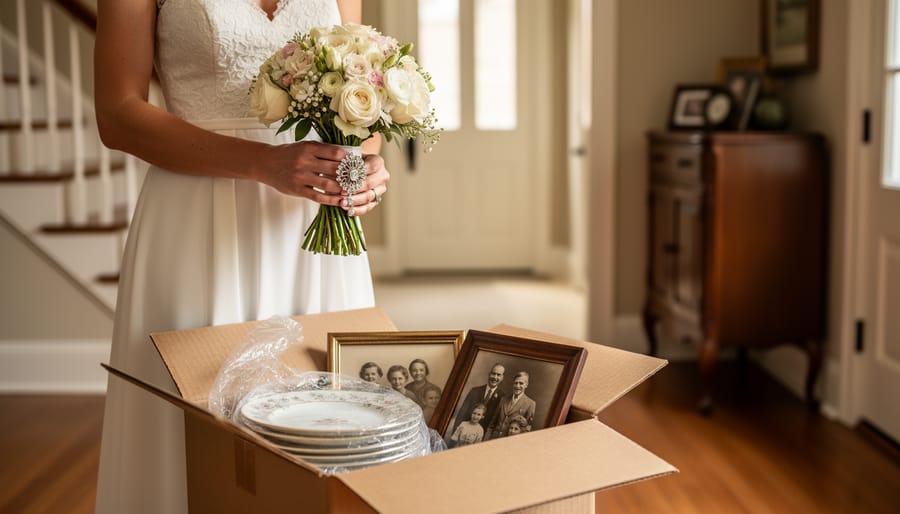
You might be choosing a bouquet in the morning and standing in a quiet hallway of your family home by afternoon. That whiplash is real, and it doesn’t mean you’re doing anything wrong. Many brides in your position feel happy and heartbroken within the same hour, sometimes within the same breath.
Maybe you’re excited about the dress and then feel a pang of guilt for being excited at all. Maybe you’re staring at two enormous to-do lists, one for the wedding and one for the house, and neither feels like it can wait. Feeling overwhelmed, scattered, tearful, or oddly numb is a normal response to carrying this much at once. You’re not being ungrateful, and you’re not being disrespectful. You’re a person holding a lot.
It helps to remember that grief doesn’t follow one script. Families across Canada honour their loved ones in very different ways. Some observe a formal mourning period, with set customs around dress, food, or the timing of celebrations. Others prefer to gather, tell stories, and keep life moving. In some traditions, a wedding is welcomed as a way to affirm family and continuity. In others, it may be paused out of respect. Your own family’s customs, faith, and personal feelings all deserve to shape what feels right.
So there’s no correct way to feel, and no single way to honour someone while you’re also celebrating. Some days you may want to lean into the wedding planning as a bright spot. Other days you may need to set everything down and simply sit with the loss. Both are allowed. Give yourself permission to move between the two without having to explain or justify it, and let the rest of this guide help you carry both projects with a little more ease.
Start With a Big-Picture Timeline
Know Which Deadlines Are Firm and Which Are Flexible
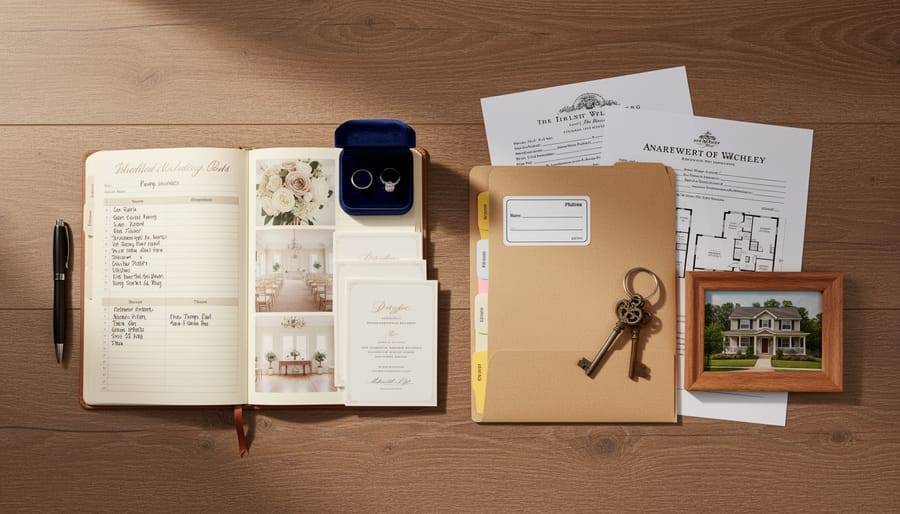
When you’re juggling a wedding and an inherited home, it helps to sort every task into one of two piles: the ones that won’t wait, and the ones that will. Wedding deadlines tend to land in the first pile. Venues want deposits by a certain date, dress fittings are booked weeks apart, and invitations need to go out so guests can arrange travel. If you’re short on runway, a streamlined approach like this 3-month wedding plan can show you which wedding tasks truly can’t slide.
Estate tasks are a different story. Many of them, such as sorting belongings, deciding whether to keep or sell, and getting quotes for repairs, can move at a gentler pace. Some steps, though, do carry time limits, especially around legal filings and taxes. Because rules vary by province and territory, it’s worth reading up on estate timelines and taxes before you assume anything is optional.
Here’s a simple way to see how the two timelines compare:
| Wedding milestone | Estate or home task | Flexibility |
|---|---|---|
| Venue deposit due | Meeting an estate lawyer or notary | Wedding: firm. Estate: schedule early. |
| Dress fittings | Sorting belongings room by room | Wedding: firm. Estate: flexible. |
| Invitations sent | Deciding to keep, sell, or rent | Wedding: firm. Estate: flexible. |
| Final headcount | Legal and tax filings | Wedding: firm. Estate: may have set deadlines. |
The safest move is to ask rather than guess. A lawyer or notary in your province can tell you which estate steps have real deadlines and which can wait until after the honeymoon. That one conversation can take a surprising amount of worry off your plate.
Decide Whether to Keep the Date or Move It
Some couples find that keeping the date is the thing that holds them steady. If the wedding is a few months away and most of the big decisions are made, the day can become a gentle anchor, something joyful to look forward to while the paperwork and the packing feel endless. If that sounds like you, keeping the date is a perfectly good choice, and it doesn’t mean you’re ignoring your loss.
Other couples realize they’re running on empty. If you’re dreading the planning calls, forgetting appointments, or feeling resentful of the very day you used to be excited about, moving it can be a real relief. Postponing isn’t failing. It’s giving yourself room to grieve and to be present when you finally say “I do.”
A few questions can help you decide:
– Can you realistically handle the estate tasks and the wedding tasks in the same few months?
– Would the people you most want there be able to attend, or would grief and travel make it harder?
– Do you feel hopeful or hollow when you picture the day as scheduled?
If a change feels right, reach out to your vendors sooner rather than later. Most would rather hear early and honestly. Start with your venue, since it usually has the least flexibility, then your photographer, caterer, florist, and anyone with a deposit on the line. Ask each one:
– Can I transfer my deposit to a new date, and is there a fee?
– How long is my deposit held, and is there a deadline to choose the new date?
– What happens to my contract if my first-choice new date isn’t available?
– Do you have weekday or off-season openings that might be easier to book?
You may also decide to scale down rather than postpone. A smaller guest list and a cozier setting, like an intimate wedding venue can lighten the load while still keeping your date. Whatever you choose, get any new agreements in writing so one less thing weighs on your mind.
Getting the Practical Side of the Inheritance in Order

Who to Call First
The first call is usually the hardest, and it helps to know that you don’t need to have everything figured out before you make it. Think of it as building a small support team, one person at a time, so you’re not carrying the whole house on your own while you’re also choosing flowers.
Start with an estate lawyer or, in Quebec, a notary. They can explain what has to happen before the home legally changes hands, including whether probate (the court process that confirms a will) is needed. Rules, timelines and fees differ from province to province and territory to territory, so someone local can tell you what applies to your family rather than what applies in general.
Next, consider an accountant. Inheriting property can raise questions about taxes, like how the estate’s final return is handled or what happens if the home is later sold. Asking early means you can plan around those answers instead of being surprised by them. This is also a good moment to ask how any proceeds might fit into your wedding and household budget.
A real estate agent becomes useful once you’re thinking about selling, renting or simply understanding what the home is worth in today’s market. You don’t need to commit to anything. Many agents are happy to have an early, no-pressure conversation.
Depending on your situation, you might also want:
– An appraiser, who can put an official value on the home, which is often needed for estate and tax purposes
– A home inspector, who can flag repairs or safety concerns before you decide whether to keep, sell or move in
If you feel comfortable, ask your family or friends for referrals, and look for professionals who have worked with inherited properties in your province. A short consultation with each can bring a lot of calm, and it gives you a clear next step, which is something both a wedding and an estate need.
Keep, Sell, Rent, or Move In?
Once the paperwork is moving, a bigger question tends to surface: what do you actually want to do with the house? Keep it, sell it, rent it out, or move in as newlyweds? There’s no single right answer, and you don’t have to settle it before the wedding.
Marriage can change the picture in real ways. A home you’d never considered living in might suddenly look like a head start on your married life, especially in cities where housing costs make saving for a down payment feel impossible. On the other hand, you might be eyeing the sale proceeds to help cover wedding costs or set up your first household. Both are understandable. Just remember that money from a sale usually isn’t available until the estate is settled, so avoid counting on it for deposits that are due sooner.
Here’s a simple way to weigh two of the most common options while you’re in the thick of wedding planning:
Pros
- Keeping the home gives you time to grieve and decide without pressure.
- It could become a future home for you and your partner, or a place to gather the family.
- Selling can free up funds for household costs or a down payment on a place of your own.
- Selling also ends ongoing costs like taxes, insurance, and upkeep.
Cons
- Keeping the home means carrying property taxes, utilities, insurance, and repairs.
- Maintaining an empty house adds one more task to an already full to-do list.
- Selling is permanent, and it can feel like letting go too quickly.
- A sale may trigger tax consequences you haven’t planned for.
Renting the home out is a middle path some couples explore, though it brings its own responsibilities as a landlord and its own tax considerations.
Whatever you lean toward, give yourself permission to wait. Irreversible choices made in the first fog of grief, or in the rush before a wedding, are the ones people most often second-guess. Living in the home for a while, or simply leaving it as is, can be a perfectly reasonable pause.
Before you commit, sit down with an accountant who understands how inherited property is treated where you live. Taxes on a sale, rental income, or a change in how the property is used can look very different depending on your province and your situation, and a short conversation now can save a lot of stress later.
Sorting Through a Lifetime of Belongings
Weaving Heirlooms Into Your Wedding Day
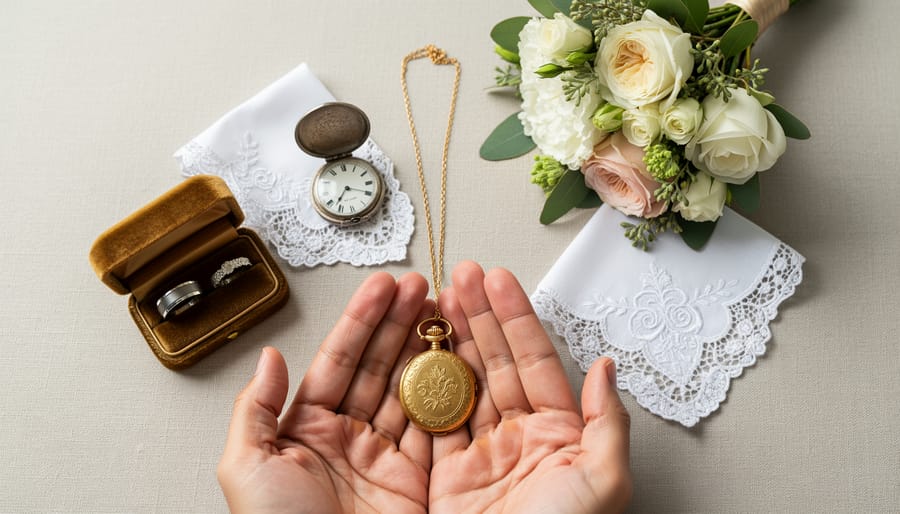
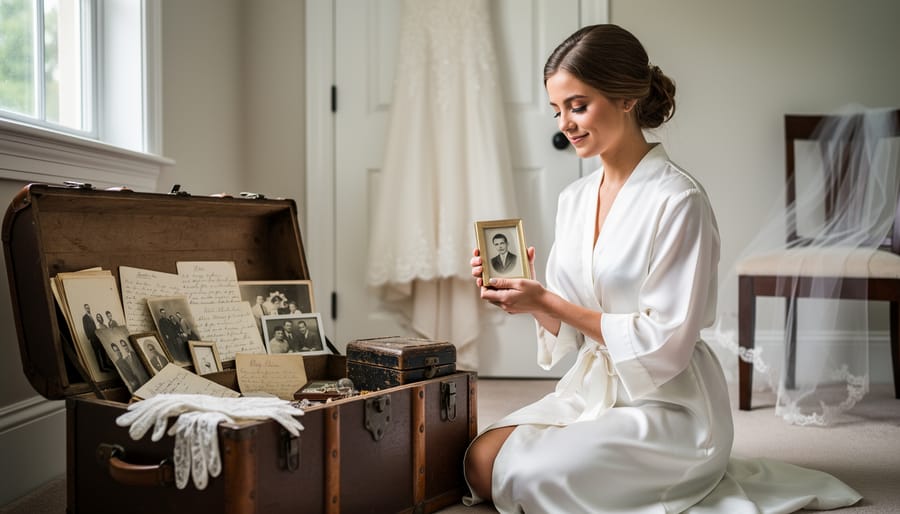
Sorting through a loved one’s home can feel heavy, but it can also turn up small treasures that carry the family’s story straight into your wedding day. A grandmother’s brooch pinned to the stem of your bouquet, for instance, lets her be part of the walk down the aisle without a single word being said.
Fabric is a lovely place to start. A lace tablecloth or christening gown can be carefully turned into a veil trim, a ring pillow, or a handkerchief tucked into your bouquet or your groom’s pocket. If you’d like a piece remade rather than just displayed, a local seamstress who works with delicate vintage textiles can tell you what’s possible before you cut into anything precious.
Family photos make a gentle focal point too. A memory table with framed portraits, a wedding photo of your parents or grandparents, and perhaps a candle gives guests a quiet place to remember. If you came across an old recipe card in a kitchen drawer, consider asking your caterer to work a version of the dish into the menu, so the meal itself becomes a tribute.
Jewellery is the classic “something old.” A ring, locket, or pair of earrings can be worn as they are, or a jeweller can resize or reset them to fit you. Reusing what you already have is also a natural fit for an eco-friendly wedding since it gives beautiful things a second life instead of buying new.
Many families hold keepsakes with deep cultural meaning. An heirloom sari, a set of gold jewellery passed from mother to daughter, or a ceremonial piece used in generations of weddings may come with its own traditions about who wears it and when. Talk with elders before changing anything, and adapt these ideas in the way that feels right for your heritage and your family.
Supporting Local Vendors Who Can Help
You don’t have to figure out heirloom projects alone. Local vendors who’ve worked with family pieces before can save you stress and protect things that can’t be replaced.
A skilled seamstress can restore a vintage veil, take in a mother’s wedding gown, or turn a tablecloth into a handkerchief with your initials stitched in. A good jeweller can resize a grandmother’s ring, reset a stone into a pendant, or repair a clasp without losing the piece’s character. Florists can echo a loved one’s favourite blooms, and a photographer can capture the family home and its keepsakes before anything changes hands.
Start close to home. Search your own city or region, and ask friends, family, and local community groups for recommendations. When you reach out, ask directly: “Have you worked on heirloom pieces before?” Request photos of past projects, a clear estimate, and a timeline that fits your wedding date. Many small Canadian studios are happy to talk through your story first.
Protecting Your Budget When Two Big Expenses Overlap
Two big expenses landing in the same season can make your spreadsheet feel like it’s staring back at you. The good news is that a little structure goes a long way, and you don’t need a lavish wedding for any of this to work. Whether you’re planning a backyard ceremony for 30 or a banquet hall celebration for 200, the same principle applies: know what’s coming before you commit.
One thing worth saying plainly: please don’t count on the house to pay for the wedding. Until the estate is settled, the home isn’t yours to sell or borrow against, and that process can take longer than expected. Plan your wedding budget around money you actually have in hand, and treat any future proceeds as a pleasant surprise rather than a plan.
Here’s a simple way to see both budgets side by side:
| Wedding costs | Inherited-home costs | One-time or ongoing? |
|---|---|---|
| Venue and catering deposits | Cleanout, junk removal, storage | One-time |
| Attire, alterations, rings | Urgent repairs or safety fixes | One-time |
| Photographer, florals, music | Property taxes and home insurance | Ongoing until the home is sold or transferred |
| Stationery and décor | Utilities, heating, snow clearing, lawn care | Ongoing, month to month |
| Final payments and tips | Legal, appraisal, and accounting fees | One-time, timing varies by estate |
Notice how many of the house costs keep ticking along whether or not you’re ready for them. A vacant home still needs insurance, heat in winter, and someone to check on it. Ask the estate lawyer or notary which of these the estate itself covers, so you aren’t paying out of your wedding fund by accident.
Build a buffer on both sides. A cushion of ten to fifteen percent of each budget is a reasonable starting point, since surprises like a leaky roof or a pricier-than-expected caterer tend to show up uninvited. If the buffer goes unused, you can top up your honeymoon or your first-year-of-marriage savings.
If numbers are a stressor, trimming the guest list, choosing an off-peak date, or leaning on DIY touches can help you keep your budget in check without losing any of the meaning. A smaller wedding can feel every bit as personal, and sometimes more so.
Sharing the Load With Family and Your Partner
You don’t have to carry both projects on your own, and honestly, you shouldn’t. The people around you are likely wondering how to help, so give them something specific to do.
Start with your partner. Sit down together, maybe over tea, and say plainly where you’re stretched thin. Maybe you’d love them to take the lead on the caterer and the music while you handle the paperwork and phone calls about the house. Dividing by strength, not by who “should” do what, keeps resentment from building.
Next, talk with your siblings or other relatives who share the inheritance. Decisions about the home can get tense fast, especially when everyone is grieving in their own way. It helps to agree on a few ground rules early: who speaks with the lawyer or notary, how you’ll make decisions (together, or by majority), and how often you’ll check in. Writing down what you’ve agreed on, even in a simple shared note, spares you from “I thought we decided” moments later.
Family dynamics differ, and that’s okay. In many families, elders carry real weight in big decisions, and in some cultures, a parent, an eldest sibling, or an uncle may be expected to guide choices about ancestral property. Honouring that doesn’t mean giving up your voice. You can invite an elder’s advice while still being clear about what you and your partner need.
Now for the wedding side. Bridesmaids, cousins, and close friends often love being handed a real job, like collecting RSVPs, wrangling the guest list, or helping with bridal attire fittings. If you’re feeling spread thin, some thoughtful wedding party bonding can also turn those shared tasks into time that actually feels good, not just busy.
If the load still feels too heavy, a wedding planner or day-of coordinator can take whole categories off your plate. Many Canadian planners offer partial packages, so you can hire help for just the parts that matter most.
Common Questions About Balancing a Wedding and an Inheritance
Here are quick, honest answers to the questions brides ask us most when a wedding and an inheritance land in the same season. Every family, province, and situation is different, so treat these as gentle starting points rather than rules.
Can we hold our wedding at the inherited home?
Often, yes, and many couples find it deeply meaningful. Before you commit, confirm that the home is legally yours to use (or that the estate allows it), check your insurance, and ask your municipality about any permits for gatherings, parking, or tents.
How do I honour a loved one who can’t be there?
Small, personal gestures often mean the most: a reserved seat with a photo, a family recipe on the menu, or a keepsake tucked into your bouquet. Follow the traditions that feel right for your family and culture, whether that’s a moment of silence, a prayer, or a favourite song.
Should I wait to plan until the estate is settled?
Not necessarily, but avoid counting on money from the home until the estate is actually settled, since timelines vary by province and situation. An estate lawyer or notary can give you a realistic picture so you can plan your budget and dates with confidence.
How do I handle family disagreements over the house?
Try to keep wedding conversations and estate decisions in separate sittings, and give everyone a chance to be heard. If tension persists, a neutral third party such as a lawyer, notary, or mediator can help, so the home doesn’t overshadow your celebration.
Another question we hear a lot is how to manage the guilt of feeling happy when you’re also grieving. Please know that joy and sadness can sit side by side, and feeling both doesn’t mean you’re doing either one wrong. Laughing at your engagement party doesn’t erase your love for the person you lost, and crying during a dress fitting doesn’t dim your excitement.
If guilt creeps in, try naming it out loud to your partner, a close friend, or a family member who understands. Some brides find comfort in building one small ritual into the day, like lighting a candle or sharing a favourite story, so their loved one feels woven into the celebration. And if you’re struggling, reaching out to a counsellor or grief support service in your community is a sign of care for yourself, not weakness.
You don’t have to do all of this at once, and you don’t have to do it perfectly. Planning a wedding while sorting out a family home is a lot for anyone to carry, and moving slowly through it isn’t a sign that you’re falling behind. It’s a sign that you’re paying attention to what matters.
Some days will belong to the wedding: tasting cakes, trying on veils, arguing happily over the playlist. Other days will belong to the house: opening drawers, finding a handwritten note, deciding what stays and what goes. Both kinds of days are allowed. You can cry over a box of old photographs in the morning and still be excited about your florist appointment that afternoon. Neither feeling cancels the other out.
Remember that both of these chapters are made of love. The home holds the stories of the people who came before you, and your wedding is the start of the stories you’ll tell next. With a little care, the two can meet in beautiful ways, whether that’s a grandmother’s brooch on your bouquet or a quiet toast to the people who couldn’t be there.
And please, ask for help. Leaning on your partner, your family, a trusted lawyer or notary, or a good local vendor is a strength, not a burden. You were never meant to hold it all alone.
When you’re ready for your next step, keep exploring the Canadian Bridal Guide for more ideas, and look for local vendors in your own community who can help bring your day, and your family’s story, to life.